-
VISION and VALUES
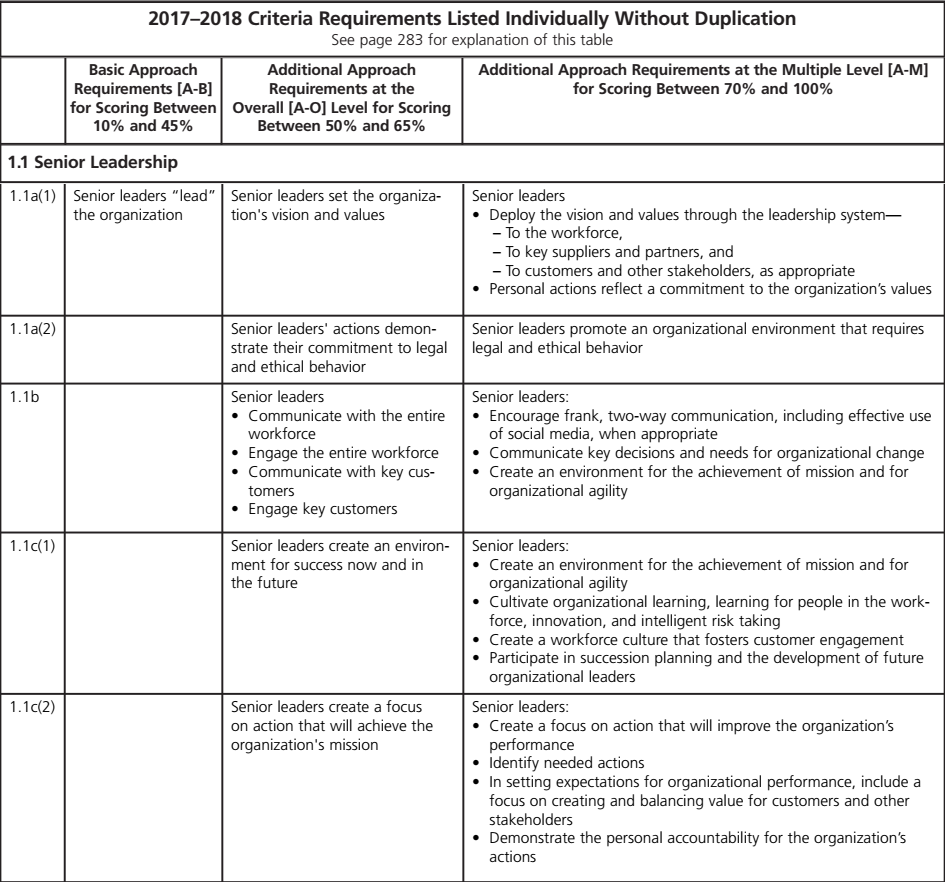
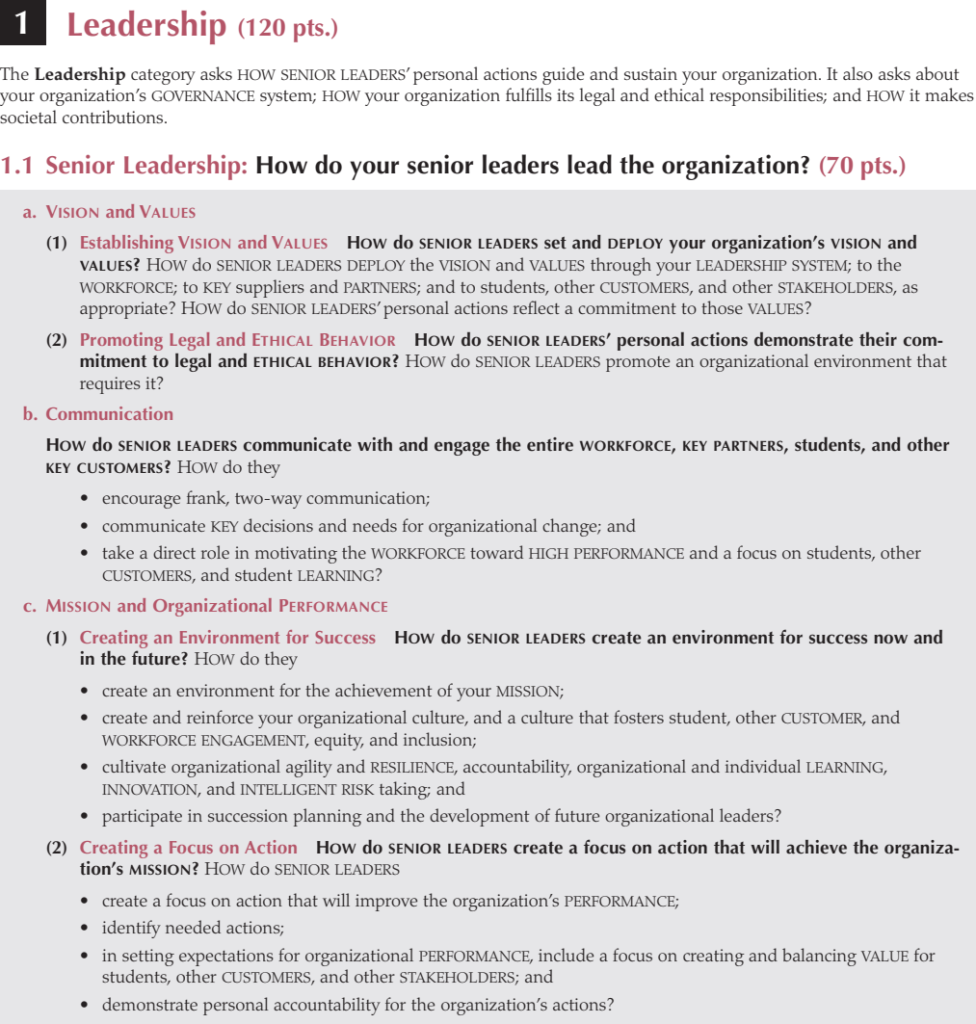
HOW do SENIOR LEADERS set your organization’s VISION and VALUES?
HOW do SENIOR LEADERS DEPLOY the VISION and VALUES through your LEADERSHIP SYSTEM; to the WORKFORCE; to KEY suppliers and PARTNERS; and to students, other CUSTOMERS, and other STAKEHOLDERS, as appropriate?
HOW do SENIOR LEADERS’ personal actions reflect a commitment to those VALUES? -
Promoting Legal and ETHICAL BEHAVIOR
HOW do SENIOR LEADERS’ actions demonstrate their commitment to legal and ETHICAL BEHAVIOR?
HOW do they promote an organizational environment that requires it?
HOW do SENIOR LEADERS communicate with and engage the entire WORKFORCE, students, and other KEY CUSTOMERS?
HOW do they
- encourage frank, two-way communication, including EFFECTIVE use of social media, when appropriate;
- communicate KEY decisions and needs for organizational change; and
- reinforce HIGH PERFORMANCE and a focus on students, other CUSTOMERS, and student LEARNING by taking a direct role in motivating the WORKFORCE, including by participating in reward and recognition programs?
-
Creating an environment for success
HOW do SENIOR LEADERS’ actions build an organization that is successful now and in the future?
HOW do they
- create an environment for the achievement of your MISSION, improvement of organizational PERFORMANCE,
PERFORMANCE leadership, organizational LEARNING, and LEARNING for people in the WORKFORCE; - create a WORKFORCE culture that delivers a consistently positive experience for students and other CUSTOMERS and that fosters CUSTOMER ENGAGEMENT;
- create an environment for INNOVATION and INTELLIGENT RISK taking, achievement of your STRATEGIC OBJECTIVES, and organizational agility; and
- participate in succession planning and the development of future organizational leaders?
- create an environment for the achievement of your MISSION, improvement of organizational PERFORMANCE,
- Creating a Focus on Action
HOW do SENIOR LEADERS create a focus on action that will achieve the organization’s MISSION?
HOW do SENIOR LEADERS
- create a focus on action that will improve the organization’s PERFORMANCE, achieve INNOVATION and INTELLIGENT RISK taking, and attain its VISION;
- identify needed actions; and
- in setting expectations for organizational PERFORMANCE, include a focus on creating and balancing VALUE for students, other CUSTOMERS, and other STAKEHOLDERS?
Notes
1.1. Your organizational performance results should be reported in items 7.1–7.5. Results related to the effectiveness of leadership and the leadership system should be reported in item 7.4.
1.1a(1). Your organization’s vision should set the context for the strategic objectives and action plans you describe in items 2.1 and 2.2.
1.1b. Two-way communication may include use of social media, such as delivering periodic messages through internal and external websites; tweets; blogging; and student, other customer, and workforce digital forums, as well as monitoring external social media outlets and responding, when appropriate.
1.1b. Senior leaders’ direct role in motivating the workforce may include participating in reward and recognition programs.
1.1b. Organizations that rely heavily on volunteers to accomplish their work should also discuss efforts to communicate with and engage the volunteer workforce.
1.1c(1). A successful organization is capable of addressing current organizational needs and, by addressing risk, agility, resilience, and strategic opportunities, of preparing for its future organizational, market, and operating environment. In creating an environment for success, leaders should consider both external and internal factors. Factors might include risk appetite and tolerance; the need for technological and organizational innovation, including risks and opportunities arising from emerging technology, data integration, and digitization; readiness for disruptions; organizational culture; work systems; the potential need for changes in structure and culture; workforce capability and capacity; resource availability; societal benefit and social equity; and core competencies.
1.1c(1). Promoting equity means ensuring that all students, other customers, and workforce members are treated fairly and that all students and workforce members can reach their full potential. Inclusion refers to promoting the full participation of all workforce members and ensuring a sense of belonging for them.
1.1c(2). Senior leaders’ focus on action considers your strategy, workforce, work systems, and assets. It includes taking intelligent risks, implementing innovations and ongoing improvements in performance and productivity, taking the actions needed to achieve your strategic objectives (see 2.2a[1]), and possibly establishing plans for managing organizational change or responding rapidly to significant new information.