Notes
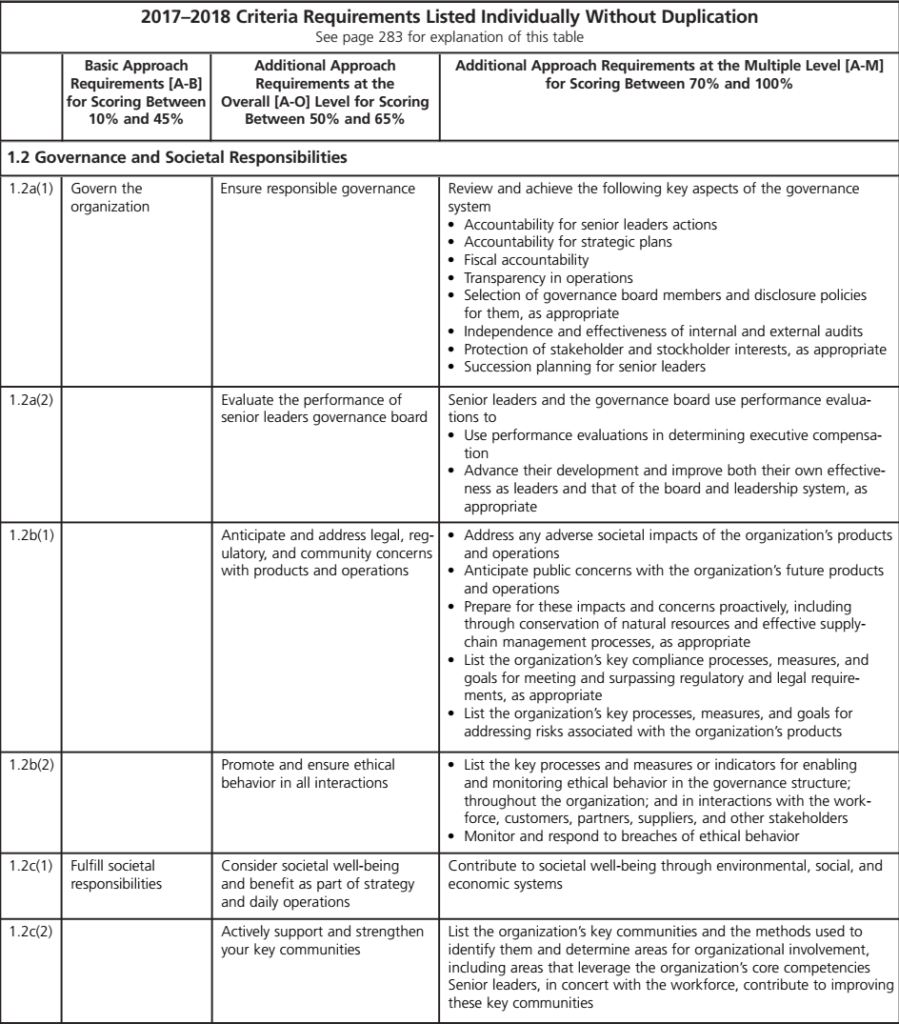
1.2. Societal contributions in areas critical to your ongoing success should also be addressed in Strategy Development (item 2.1) and Operations (category 6). Key societal results should be reported in item 7.4.
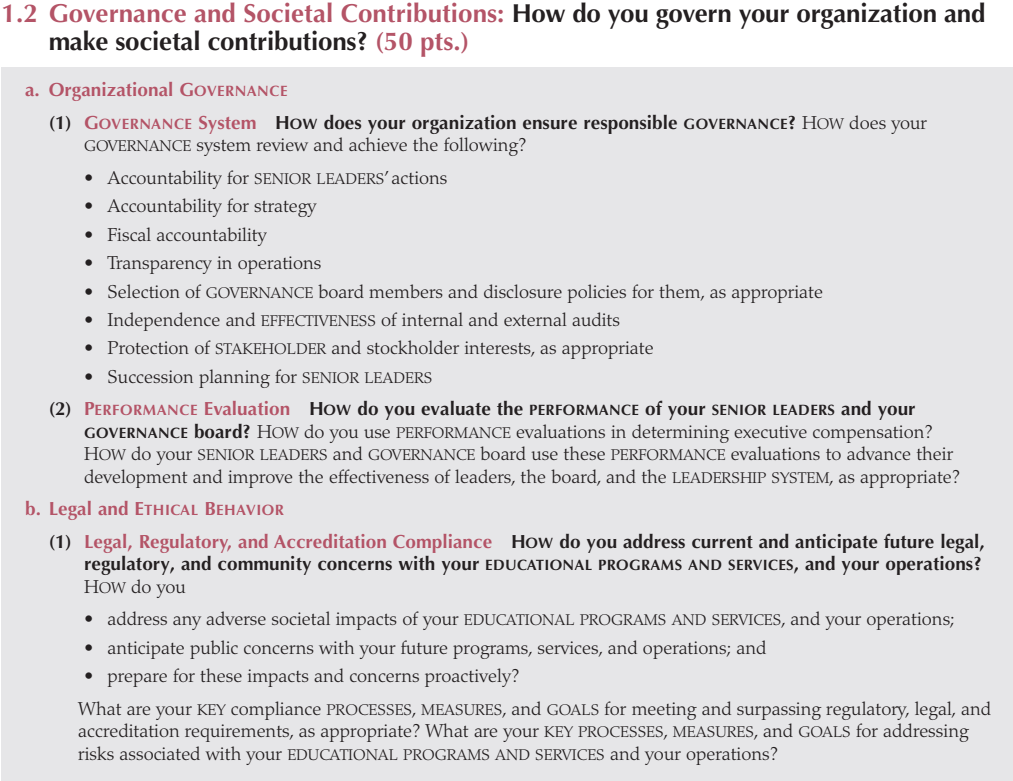
1.2a(1). In protecting stakeholder interests, the governance system should consider and approve appropriate levels of risk for the organization, recognizing the need to accept risk as part of running a successful organization.
1.2a(1). The governance board’s review of organizational performance and progress, if appropriate, is addressed in 4.1(b).
1.2a(1). Transparency in the operations of your governance system should include your internal controls on governance processes. For some education organizations, the parent’s board or an external advisory board may provide some or all governance board functions. For education organizations that serve as stewards of public funds, areas of emphasis are stewardship of those funds and transparency in operations.
1.2a(2). The evaluation of leaders’ performance might be supported by peer reviews, formal performance management reviews, reviews by external advisory boards, and formal or informal feedback from and surveys of the workforce and other stakeholders.
1.2b(1). Proactively preparing for adverse societal impacts and concerns may include conserving natural resources, reducing carbon emissions, and using effective supply network management processes, as appropriate.
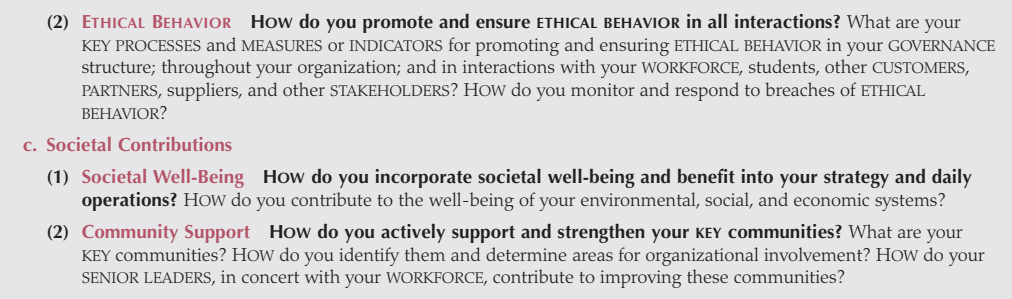
1.2b(2). Measures or indicators of ethical behavior might include instances of ethical conduct or compliance breaches and responses to them, survey results showing workforce perceptions of organizational ethics, ethics hotline use, the results of ethics reviews and audits, the integrity of testing, equal access to resources, and implementation of institutional review board principles in research involving human and animal subjects. Such measures or indicators might also include evidence that policies, workforce training, and monitoring systems are in place for conflicts of interest; protection and use of sensitive data, information, and knowledge generated through synthesizing and correlating these data; and proper use of funds.
1.2c. Some organizations may contribute to society and support their key communities totally through the mission related activities described in response to other Criteria questions. In such cases, it is appropriate to respond here with any “extra efforts” through which you support these communities.
1.2c(1). Areas of societal well-being and benefit to report are those that go beyond the compliance processes you describe in 1.2b(1). They might include organizational or collaborative efforts to improve the environment; strengthen local community services, education, health, and emergency preparedness; address social inequities; and improve the practices of professional associations.
1.2c(2). Areas for organizational involvement in supporting your key communities might include areas that leverage your core competencies.