Notes
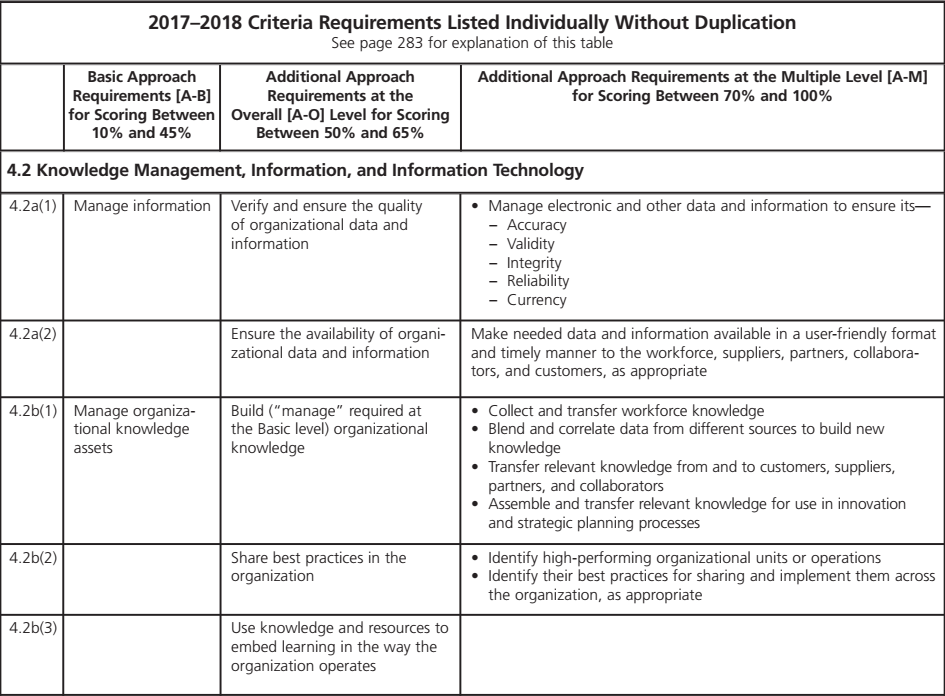
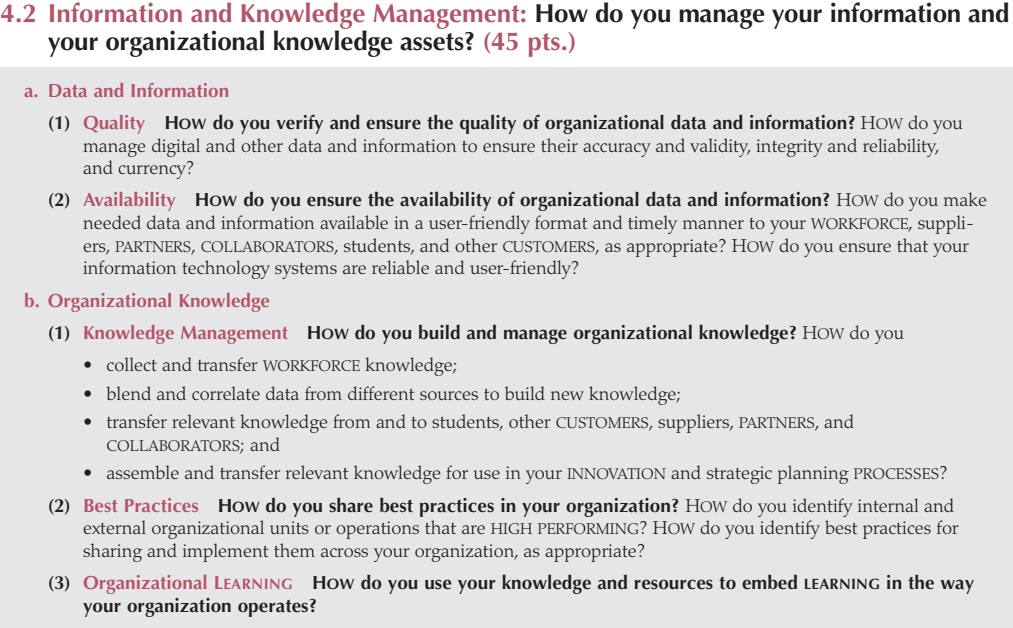
4.2a(2). Information technology systems include, for example, physical devices and systems; software platforms and applications; and externally based or shared information systems, such as those stored in the cloud or outside your organization’s control.
4.2a(2). The security and cybersecurity of your information technology systems are addressed as part of your overall security and cybersecurity system in item 6.2. That system involves managing and reducing risks to operational systems as well as to data and information.
4.2b(1). Building and managing organizational knowledge from different sources may involve handling big data sets and disparate types of structured and unstructured data and information, such as data tables, video, audio, photos, and text. Blending and correlating data may involve usingartificial intelligence, digital data analytics, and data science techniques that detect patterns in large volumes of data and interpret their meaning. Using these techniques to make decisions with human consequences requires deploying technology and leveraging data in a way that protects information about organizations and individuals.
4.2b(3). Embedding learning in the way your organization operates means that learning (1) is a part of everyday work; (2) results in solving problems at their source; (3) is focused on building and sharing knowledge throughout your organization; and (4) is driven by opportunities to bring about significant, meaningful change and to innovate.