Criterion 3 – Teaching and Learning Approach
AUNQA requirements for Criterion 3
3.1 Guided by philosophy
The educational philosophy is shown to be articulated and communicated to all stakeholders. It is also shown to be reflected in the teaching and learning activities.
Diagnostic questions
- Is an educational philosophy explicit and shared by all the teaching staff? What is it?
- What are teaching and learning activities that reflect the educational philosophy?
- Is the teaching provided by other departments (e.g. general courses) satisfactory? How is it evaluated?
- Are the teaching and learning methods used aligned with the ELOs?
3.2 Responsible participation
The teaching and learning activities are shown to allow students to participate responsibly in the learning process.
Diagnostic questions
- Do the students participate with responsibilities in learning processes? In what teaching and learning activities?
- What are the students’ responsibilities in the teaching and learning activities?
3.3 Learning by action
The teaching and learning activities are shown to involve active learning by the students.
Diagnostic questions
- What are teaching activities used to promote learning by action or active learning?
- Is practical training a compulsory or optional part of the programme?
- Are the extent and result of practical training satisfactory?
- What benefits do employers and students gain from the practical training?
- How are students coached to do well in the practical training?
- How is the assessment for practical training done?
3.4 Life-long learning
The teaching and learning activities are shown to promote learning, learning how to learn, and instilling in students a commitment for life-long learning.
Diagnostic questions
- By what teaching and learning activities is a commitment to life-long learning instilled in students?
- How do the teaching activities enhance life-long learning?
- Do the chosen methods fit into the learning outcomes of the courses?
3.5 Entrepreneurial mindset
The teaching and learning activities are shown to inculcate in students, new ideas, creative thought, innovation, and an entrepreneurial mindset.
Diagnostic questions
- What are teaching and learning activities used to inculcate in students entrepreneurial mindset?
- How do the teaching activities help students develop entrepreneurial mindset?
- Do the chosen methods fit into the learning outcomes of the courses?
- How is the assessment done?
3.6 Teaching and learning improvement
The teaching and learning processes are shown to be continuously improved to ensure their relevance to the needs of industry and are aligned to the expected learning outcomes.
Diagnostic questions
- How is the teaching and learning approach evaluated?
- What is the procedure for evaluation and improvement of the teaching and learning approach?
Scoring for TRSU QA
| TRSU-QA score | 1 | 2 | 3 | 4 | 5 |
| Items showing QA practice | 1 item | 2 items | 3 items | 4 items | 5-6 items |
AUNQA scoring rubrics
A seven-point rating scale used for AUNQA assessment is described below.
1. Absolutely inadequate
The QA practice to fulfil the criterion is not implemented.
There are no plans, documents, evidences or results available.
Immediate improvement must be made.
2. Inadequate and improvement is necessary
The QA practice to fulfil the criterion is still at its planning stage or is inadequate where improvement is necessary.
There is little document or evidence available.
Performance of the QA practice shows little or poor results.
3. Inadequate but minor improvement will make it adequate
The QA practice to fulfil the criterion is defined and implemented but minor improvement is needed to fully meet them. Documents are available but no clear evidence to support that they have been fully used. Performance of the QA practice shows inconsistent or some results.
4. Adequate as expected
The QA practice to fulfil the criterion is adequate and evidences support that it has been fully implemented. Performance of the QA practice shows consistent results as expected.
5. Better than adequate
The QA practice to fulfil the criterion is better than adequate. Evidence supports that it (the QA practice) has been efficiently implemented. Performance of the QA practice shows good results and positive improvement trend.
6. Example of best practice
The QA practice to fulfil the criterion is considered to be example of best practices in the field. Evidences support that it has been effectively implemented.
Performance of QA practice shows very good results and positive improvement trend.
7. Excellent (example of world-class or leading practice)
The QA practice to fulfil the criterion is considered to be excellent or is an example of world-class practices in the field. Evidences support that it has been innovatively implemented.
Performance of the QA practice shows excellent results and outstanding improvement trends.
How to write a response to the criterion requirements
- The response should describe a QA practice that the program do to fulfil the criterion. The QA may be a PDCA (plan-do-check-act) process to ensure the quality, and include documentation, evidence and result of the implementation.
- The response should illustrate clearly what the QA mechanisms or instruments are; when, where, by who, and how they are implemented and managed to fulfil the criteria.
- The response should identify and evaluate problems or issues that are not addressed, and indicate how the problems will be dealt with. The diagnostic questions in each of the criterion requirements may help identify the problems.
- To be concise and factual, the response should focus on information or data (or objective evidence) that directly addresses the criteria, and provide trends and statistics to show achievement and performance.
How the QA practice fulfil the criterion
Quality assurance practice should have QA plan that evaluates and may modify organization’s procedures to ensure that they provide the desired results. It includes documentation for the planning, implementation and assessment procedures for a project, process or any QA activity. To fulfil requirement 1.1 Outcomes formulation, for example, the QA plan should provide information to answer the following questions.
- What procedure does the program use to formulate the expected learning outcomes?
- Is a learning taxonomy used to write the statement of LOs? What taxonomy and how is it used?
- Is the taxonomy used for program or course learning outcomes, or both? Why?
- What are the objectives in terms of the quality of the learning outcomes (e.g. transparency, ease of assessment, the extent of alignment, enabling hierarchy, effectiveness, clarity to the stakeholders)?
- What is the process used to ensure that the quality objectives are met?
- What is a method used to measure the achievement of the quality objectives?
Operational Result
3.1 The educational philosophy is shown to be articulated and communicated to all stakeholders. It is also shown to be reflected in the teaching and learning activities.
การดำเนินการ
สาขาวิชาฯ มีปรัชญาการจัดการศึกษาในเล่มหลักสูตรฉบับปรับปรุง พ.ศ. 2565 คือ เคร่งครัดมาตรฐานในการปฏิบัติเพื่อความปลอดภัยสูงสุด รวดเร็ว และราบรื่น คือหัวใจในการให้บริการการจราจรทางอากาศ และมีวัตถุประสงค์ คือ 1. เพื่อผลิตบัณฑิตให้มีความรู้ในการควบคุมการจราจรทางอากาศ และมีทักษะในการใช้งานของอุปกรณ์สื่อสารและอุปกรณ์ที่ใช้ในการควบคุมการจราจรทางอากาศเพื่อสื่อสารให้นักบินสามารถเดินทางจากต้นทางไปยังจุดหมายปลายทางได้อย่างปลอดภัย 2.เพื่อให้บัณฑิตมีทักษะและไหวพริบ ตัดสินใจได้ถูกต้องในการแก้ไขปัญหาในสถานการณ์ต่างๆ ได้อย่างถูกต้อง ได้อย่างมีประสิทธิภาพและรวดเร็ว และ 3. เพื่อผลิตบัณฑิตให้มีคุณภาพ มีจริยธรรมและคุณธรรมในการประกอบอาชีพในสายงานการควบคุมการจราจรทางอากาศ และมีปรัชญาของทางมหาวิทยาลัยว่า การจัดการศึกษาที่ดีและมีคุณภาพ พัฒนาบัณฑิตให้ประสบความสำเร็จและมีสังคมชีวิตที่ดี พร้อมทั้งสามารถนำไปประยุกต์ใช้ในกิจการอื่น ๆ ที่เกี่ยวข้องกับอุตสาหกรรมการบิน เพื่อผลิตบัณฑิตให้เป็นผู้มีคุณธรรม จริยธรรม มีความรับผิดชอบต่อวิชาชีพ สังคม และสิ่งแวดล้อม มีจรรยาบรรณแห่งวิชาชีพ เป็นผู้มีความสามารถในการปฏิบัติงานในสายงานการควบคุมจราจรทางอากาศและกิจการอื่น ๆ ที่เกี่ยวข้องกับอุตสาหกรรมการบิน และเป็นผู้ที่มีความสามารถสูงในการใช้ภาษาอังกฤษเพื่อการสื่อสาร กับนักบินนานาชาติในสายงานอาชีพได้ โดยทางสาขาวิชาฯได้มีการสื่อสารปรัชณาการศึกษาและวัตถุประสงค์ของหลักสูตรออกไปยังผู้มีส่วนได้ส่วนเสีย ดังรายละเอียด ต่อไป
| ผู้มีส่วนได้ส่วนเสีย | การติดต่อสื่อสาร |
| 1. อาจารย์ประจำหลักสูตรและอาจารย์ผู้สอน | การประชุมภายในสาขาวิชาฯ |
| 2. อาจารย์พิเศษจากภายนอก | การประชุมภายในก่อนเปิดภาคการศึกษา |
| 3. ผู้ช่วยอาจารย์ | การประชุมภายในสาขาวิชาฯ |
| 4. นักศึกษา | การปฐมนิเทศน์และชั่วโมงการพบอาจารย์ที่ปรึกษา |
| 5. สถานประกอบการ | โบชัวของสาขาวิชาฯ |
โดยทางสาขาวิชาฯ ได้สอดแทรกปรัชญาการศึกษาเหล่านี้เข้าไปในรายวิชาชีพต่าง ๆ ที่บรรจุอยู่ในเล่มหลักสูตร เพื่อให้นักศึกษาได้เกิดการเรียนรู้ และตระหนักถึงความปลอดภัย รวดเร็ว และราบรื่นในการจัดการจราจรทางอากาศ ยกตัวเองเช่น รายวิชา 223 221 Aerodrome Control Service
ผลการเรียนรู้ที่คาดหวัง
| main | Moral and Ethical | Knowledge | Cognitive / Intellectual | Interpersonal Skills and Responsibility | Numerical and Information Literacy |
| Major | 1.1.ตระหนักใน คุณค่า และ คุณธรรม จริยธรรม เสียสละ และซื่อสัตย์ สุจริต Show awareness through adherance or appreciation of moral and ethical values particularly integrity and self sacrifice | 2.1.มีความรู้และ ความเข้าใจ เกี่ยวกับหลัก การและทฤษฎีที่สำคัญใน เนื้อหาที่ศึกษา Show genuine understanding (by verbal and written interaction or presentation) about important principles, theoretical and practical concepts of the subject matters | 3.2.สามารถรวบรวม ศึกษา วิเคราะห์ และสรุป ประเด็นปัญหา และ ความต้องการ Collect, study and analyze information to summarize key issues, problems and solution requirements | 4.3.มีความรับผิดชอบการพัฒนา การเรียนรู้ทั้งของตนเอง และ ทางวิชาชีพอย่างต่อเนื่อง สามารถใช้ความรู้ในศาสตร์มาชี้นำสังคมในประเด็นที่เหมาะสม รวมทั้งมีความรับผิดชอบในการ กระทำของ ตนเองและรับผิดชอบงานในกลุ่ม Show on-going responsibility toward self learning and professional advancement; use subject and technical knowldge to lead the society in some issues; show responsibility (by reflection and response) toward the consequence or outcome of own performance and those of the team | 5.2.สามารถ ประเมิน สารสนเทศและแนะนำประเด็นการแก้ไขปัญหา สถานการณ์ทั้ง ปกติและที่ผิด ปกติไปจากการปฏิบัติงาน ประจำ โดยใช้สารสน เทศทางคณิต ศาสตร์ หรือการแสดง สถิติ ประยุกต์ต่อ ปัญหาที่เกี่ยว ข้องอย่างสร้าง สรรค์ Analyze and interpret numerical or statistical information intuitively to identify effective solutions to both routine and non-routine problems or issues |
| Major | 1.2. มีวินัย ตรงต่อเวลา และมีความรับผิดชอบต่อตน เองและสังคม มีภาวะความ เป็นผู้นำและ ผู้ตาม สามารถทำงานเป็นทีมและ สามารถแก้ไข ข้อขัดแย้งและลำดับความ สำคัญ PO1.2 Demonstrate self discipline, punctuality and responsibility toward oneself and the society; work effectively as a leader or member of the team to resolve conflicts or prioritized tasks 1.3. เคารพ กฎระเบียบ และ ข้อบังคับ ต่างๆ ขององค์กรและสังคม เคารพสิทธิและรับฟังความคิด เห็นของผู้อื่น Adhere to codes, regulations and policies of the organization or society; respect or honor human right and opinion of the others 1.4. สามารถ วิเคราะห์ผล กระทบจากการจัดการควบคุมจราจรทาง อากาศต่อ บุคคล องค์กร และสังคม Take responsibility for the consequence or impacts that air traffic control has toward to individuals, organization and the society 1.5. มีจรรยา บรรณทาง วิชาการและ วิชาชีพ Demonstrate personal adherence to the academic and professional codes of ethics | 2.2. สามารถ วิเคราะห์ ปัญหา เข้าใจและ อธิบาย ความต้องการ ทางด้านการ ควบคุมจราจรทางอากาศ Analyze typical problems based on conceptual understanding and explain necessary requirements for the air traffic controllers 2.3. สามารถ ประยุกต์ความรู้ ทักษะ และ การใช้ เครื่องมือที่ เหมาะสมกับ การแก้ไข ปัญหา เข้าใจและ สนใจพัฒนา ความรู้ ความชำนาญ ทางด้านการ ควบคุมจราจรทางอากาศ อย่างต่อเนื่อง Apply knowledge, techniques and tools appropriately to solve problems; show on-going enthusiasm to advance practical understanding and expertise in air traffic control discipline 2.4. สามารถ วิเคราะห์ ออกแบบ ปรับปรุงระบบการจัดการด้านการควบคุม จราจรทาง อากาศตรงตามข้อกำหนด ติดตามความ ก้าวหน้าทาง วิชาการและ วิวัฒนาการ ด้านการควบ คุมจราจรทาง อากาศอย่างต่อเนื่อง Analyze, design and improve techniques or systems of air traffic control procedures and management per specifications; acquire and share up-to-dated knowledge and technology advancement in air traffic control 2.5. สามารถ บูรณาการ ความรู้ด้านการควบคุมจราจรทางอากาศที่ ศึกษากับความรู้ในศาสตร์ อื่น ๆ Show (by written or verbal interactions) inter-related knowledge and understanding between the air traffic control and the other subjects or disciplines | 3.1. พัฒนา แนวคิดอย่างมีวิจารณญาณ รอบคอบ ภายใต้ความ เพียงพอของ ข้อมูลและ อย่างมีระบบ Develop and propose critical idea based on thorough, informed and systematic thinking 3.3. สามารถ ประยุกต์ความรู้และทักษะในการแก้ไข ปัญหาทางด้านการควบคุม จราจรทาง อากาศได้อย่าง เหมาะสมและ สร้างสรรค์ Apply knowledge and techniques appropriately and creatively to solve typical problems of air traffic control 3.4. มีความ เป็นผู้นำทาง ปัญญาในการ คิดพัฒนาการ จัดการเรียนรู้ อย่างสร้าง สรรค์และมี วิสัยทัศน์ Demonstrate intellectual leadership through devising and maintaining effective learning based on creativity and vision | 4.1. สามารถ สื่อสารกับกลุ่ม คนหลากหลาย และสามารถ สนทนาทั้งภาษา ไทยและภาษา ต่างประเทศอย่างมีประสิทธิภาพ Communicate effectively with a variety of people and situation using Thai and English language 4.2. สามารถ ให้ความช่วย เหลือและอำนวยความสะดวกแก่ การแก้ปัญหา สถานการณ์ต่างๆ ในกลุ่ม ทั้งในบทบาทของผู้นำ และผู้ร่วมทีม ทำงาน Facilitate or provide essential support for a team to solve problems in various situation as an active leader or member 4.4. สามารถ เป็นผู้ริเริ่มแสดง ประเด็นในการ แก้ไขสถานการณ์ทั้งส่วนตัวและ ส่วนรวม พร้อมทั้งแสดงจุดยืนอย่างพอ เหมาะทั้งของ ตนเองและ ของกลุ่ม Show self initiative and viewpoint to identify and resolve problems or issues for the good of oneself and the others in the community | 5.1. มีทักษะ ในการใช้ เครื่องมือที่ จำเป็นที่มีอยู่ในปัจจุบันต่อการทำงานด้านการควบคุมจราจร ทางอากาศ ที่เกี่ยวกับ คอมพิวเตอร์ Demonstrate practical and skillful use of computers and technological tools to perform air traffic control tasks5.3. สามารถ สื่อสารอย่างมี ประสิทธิภาพทั้งปากเปล่าและ การเขียน เลือกใช้รูปแบบของสื่อการนำ เสนออย่าง เหมาะสม Communicate effectively in both verbal and written means while using approriate methods for presentation 5.4. สามารถ ใช้สารสนเทศ และเทคโนโลยี สื่อสารในการ ปฏิบัติงานด้านการควบคุม จราจรทาง อากาศอย่าง เหมาะสมและ นำมาใช้ในการ แก้ปัญหาอย่าง สร้างสรรค์ Determine key information and use effective communication technology to creatively perform air traffic control or problem solving tasks |
แผนการสอน
| Unit topic & time | Learning Content | Learning outcomes for the content |
| Topic: 1, Week(s): 1, Time: 2 hrs. Module 1 – Control of arriving IFR traffic and Phraseologies | Lecture and Discussion – The procedure of IFR Traffic and instrument to be used – Criteria of IFR flight – Essential information for IFR Traffic – Phraseology to be used – VDO presentation for IFR flight – THA601 BKK to UBL Assignment – The phraseology between ATC and pilot – Complete the strip marking from the communication between ATC and pilot | The students have to know and understand about the IFR procedure, IFR criteria, Essential information before landing and takeoff of each aerodrome, and phraseology to used for communication and providing in Air Traffic Service. They will understand and see the pattern of IFR procedure. How they need to do and instruct the pilot to fly from one aerodrome to another aerodrome by used an equipment to help when working. They will familiar with the technical words in phraseology to be used and they will understand more about the symbol in the strip marking. They can use a correct phraseology and instruct a correct information to pilot in command |
| Topic: 2, Week(s): 2, Time: 2 hrs. Module 2 – Control of arriving VFR traffic and Phraseologies | Lecture and Discussion – The procedure of VFR Traffic and traffic circuit to be used – Criteria of VFR flight (the altitude to be flown) – Essential information for VFR Traffic – VFR Phraseology and essential information to be instructed VDO presentation for VFR flight – SUNNY201 BKK to KRT Assignment – The phraseology between ATC and pilot – Complete the strip marking from the communication between ATC and pilot | The students have to know and understand about the VFR procedure, VFR criteria, Essential information before landing and takeoff of each aerodrome, and phraseology to used for communication and providing in Air Traffic Service. They will understand and see the pattern of VFR procedure. How they need to do and instruct the pilot to fly from one aerodrome to another aerodrome, from left downwind to right downwind, from specify area to training area. They will familiar with the technical words in phraseology to be used and they will understand more about the symbol in the strip marking for VFR flight. They can use a correct phraseology and instruct a correct information to pilot in command. |
| Topic: 3, Week(s): 3, Time: 2 hrs. Module 3 – Flight Progress strips for departing aircraft | Lecture and Demonstration – The symbols to be used in the strip marking and meaning of each – The positions to be insert in the flight progress strip – The demonstration to complete the strip marking Assignment – Fill a correct information in the strip marking from the communication of ATC and pilot | The students will more understand about the symbols and able to insert it in the correct position in the flight progress strip The demonstration will make them clear and understand more about the strip marking to be used when control the aircraft Assignment will make them more understand and familiar with the flight progress strip and phraseology between ATC and pilot |
| Topic: 4, Week(s): 4, Time: 2 hrs.Week 4 Module 4 ATC Clearance | Lecture and Discussion – ATC clearance – Conditions of ATC clearance – Appropriate for ATC clearance – Flight level to be used for each sector VDO presentation – The appropriate ATC clearance Assignment – The appropriate flight level for each sector – The appropriate flight level for RVSM and Non-RVSM | The students will familiar with ATC clearance to instruct to the pilot and they will know and understand about the conditions of ATC clearance. They will able to specify the appropriate flight level to the pilot and instruct them if flight level to be requested isn’t appropriate. The video will show them. How to communicate and advise the pilot with correct information and appropriate flight level to be flown. The assignment will help the students understand more about the appropriate flight level to be flown for each sector especially in case of RVSM and Non-RVSM. |
| Topic: 5, Week(s): 5, Time: 2 hrs. Module 5 – Push back and start up control of departing aircraft | Lecture and Video presentation – The phraseology to be used between ATC, Pilot, and Ground staff in the ramp – The procedure to push back and start up – The condition of push back and start up – Taxi clearance after push back and start up VDO presentation – VDO for push back and start up | The students will know and understand about the procedure of push back and start up and will familiar with the phraseology to be used between ATC, Pilot, and Ground staff in the ramp. They will also understand about the taxi clearance and the procedure of transfer between ground unit to aerodrome control unit after the aircraft reaching the holding position. They students will able to imagine the procedure of push back and start up and they will also familiar phraseology to be used from the beginning until the end of the process. |
| Topic: 6, Week(s): 6, Time: 2 hrs. Module 6 – Automatic Terminal Information Service (ATIS) | Lecture and Discussion – All information that necessary for departing and arriving aircraft – Abbreviation codes – Initial broadcast – RWY and TWY sure face information Voice VDO for ATIS – DMK ATIS – SVB ATIS | The students have to know and understand the ATIS procedure to be provided for ATS and instruct the appropriate information to the pilot in command when them come to takeoff and landing. They will know and understand more about the information from ATIS and they able to use this information to instruct the pilot or any organizations that needed. |
| Topic: 7, Week(s): 7, Time: 2 hrs. Module 7 – Control departing traffic | Lecture and Discussion – Aircraft category – Separation of each category – Condition and information to be used – ATC clearance before takeoff VDO presentation – VDO for takeoff – VDO for strong wind takeoff | The students will know and able to manage the separation of each aircraft category, also they will instruct the correct information to the pilot before takeoff such RWY surface, TWY surface, and wind direction because it will have the effect with the aircraft during takeoff and flying. They will able to beware to instruct the pilot with essential information and ATC clearance. They have to think about the wind direction to be used for takeoff again, if the wind direction is changing. |
| Topic: 8, Week(s): Time: 2 hrs. Week 8 Midterm Examination | Mid-term Examination | The assessment in needful to graduates to achieve the desired leaning outcomes of the course |
| Topic: 9, Week(s): 9, Time: 2 hrs. Module 8 – Control of arriving & departing IFR/VFR traffic Module 9 – Forward Information | Lecture and VDO presentation – The condition to be used for takeoff and landing for IFR and VFR – Separation and wake turbulence – Priority of IFR and VFR – Information to be transfer to the next unit that concern – Essential information to be informed – VDO presentation – VDO of Departing traffic – VDO of Arriving traffic – VDO of Separation between IFR and VFR – VDO of wake turbulence | The students will know and understand about the process to be used between IFR and VFR flight and also they will able to provide a separation between Light aircraft, Medium aircraft, and Heavy aircraft including priority to fly follow the essential information that get from ATIS and NOTAM. VDO will help the students to understand about the all process of IFR and VFR. How they are operating in the traffic circuit and vicinity of aerodrome after getting transfer from approach control service at 10 NM. Or specific area between A/D and APP. |
| Topic: 10, Week(s): 10, Time: 2 hrs. Module 10 – Control of vehicle and personnel | Lecture and Discussion – Type of Vehicle in ramp control – The Criteria to be enter the Airside control area for vehicle – The qualification of the person who able to enter the Airside control area – The regulations and rules of Airside control area Assignment – The regulation s and rules to be used for vehicle and personnel in Airside control area – Picture and the description of the vehicle to be specify | The students will able to know about the regulation and rule of ramp control area and the qualification of the personnel who will enter the airside control area and also the category and the responsibility of each vehicle in the ramp control Such as Tow truck, Dolly, Fuel and water truck, etc. The assignment will help them to familiar with a regulation and rule in airside control area and they will know about the responsibility of each vehicle and what are they use for because each vehicle have a difference role and responsibility. |
| Topic: 11, Week(s): 11, Time: 2 hrs. Module 11 – Helicopter traffic | Lecture and Discussion – The type of helicopter – The type of landing gear – The speed of helicopter – The condition to be flown for helicopter VDO and Picture – VDO of taxi for helicopter- Picture of each helicopter type | The students will able to know about the type and the condition to be flown of each helicopter and they need to comply this traffic with another traffic in the circuit for providing a separation and a sequence for traffic. VDO will help them understand more about the speed of each helicopter type and picture will help them to identify the helicopter when control in the simulation class because a helicopter have many types and they have special landing process. |
| Topic: 12, Week(s): 12, Time: 2 hrs. Module 12 – Aircraft making touch and go landing | Lecture and Demonstration – The procedure for touch and go flight – The priority for touch and go flight – The holding position for touch and go flight – The position to be used for touch and go flight Demonstration and VDO for touch and go flight Demonstration of touch and go flight – VDO presentation for touch and go flight | The students will familiar with a training pilot who are use the aircraft for practice in the traffic circuit or use the aircraft for testing. They need to provide a special separation for this flight and they will know about the special procedure to be used for this flight too. The students will have to consider about the IFR, VFR, LOCAL traffic, and touch and go traffic to provide a separation, sequence, and holding some traffic in the holding area or delay some traffic in the traffic pattern. The students will understand more about the traffic in circuit and they will familiar with training flight and training pilot too. |
| Topic: 13, Week(s): 13, Time: 2 hrs. Module 13 – Emergencies and abnormal situations | Lecture and Presentation – Emergency procedure – Emergency code – Priority for landing – Signals to be used in case of Unlawful interference – The unit to be coordinated Assignment – Report of Emergency landing- Report of Unlawful Interference | The students will know and understand about the procedure of emergency situation and they will able to communicate with another unit that concern for standby requesting such as ambulance, fire truck, ground staff, police, etc. The report will help them understand and able to identify the emergency situation which one is more seriously and which one is minor serious to provide a flow traffic in the circuit and will not have any effect with other aircraft or passenger. |
| Topic: 14, Week(s): 14, Time: 2 hrs. Module 14 – Military Procedure | Lecture and Discussion – 360 Over head procedure – Military Procedure – Separation to be provided – Speed control for fighter aircraft Demonstration and VDO presentation – Demonstration for 360 over head traffic – VDO presentation for military traffic | The students have to know about the procedure of military and fighter aircraft because each type of military traffic. There are different procedure to be used for each type such as fighter aircraft, carrying aircraft, or training aircraft They have able to control a speed of fighter too because they will have a effect with the traffic in the circuit when they are coming to land at the same aerodrome and the students have think about fighter in case of abnormal situation While they cannot land or there are a lot of traffic. The VDO will help them more understand about the 360 over head traffic and procedure of military aircraft in case of training, military mission |
| Topic: 15, Week(s): 15, Time: 2 hrs. – Review all for final test and quiz | Discussion and Quiz | Formative assessment of the graduates to achieve the desired learning outcomes of the course |
| Topic: 16, Week(s): 16, Time: 3 hrs. Final Examination | Final Examination | The assessment in needful to graduates to achieve the desired leaning outcomes of the course |
การประเมินผล
| Assessment Items | Assessment task | ScheduledWeek | Proportion ofcourse grading(%) |
| Class participation(All the major domains of this course will be assessed as follows:1. Moral and Ethics – Plagiarism check during their classroom participation, respecting the opinion of fellow mates, etc2. Knowledge – ability to apply the concepts learnt in various scenarios3. Cognitive / Intellectual – ability to analyze the real-time problems of the airport management4. Interpersonal Skills and Responsibility -the team management and the leadership qualities in various activities such as class discussions5. Numerical and Information Literacy – ability to express their ideas and opinions during case discussions and presentations.)Google Meet: gpc-advr-twe Google Classroom Link 1: https://classroom.google.com/c/NjEyMTg5NTIyMDY2 | Attendance, Punctuality to the class, On-time assignment submission and Class Discussion | Every session | 5% |
| Assignments and quizzesClick above Google Classroom links to view Assignment Questions | Assignments and Quizzes | weekly | 15% |
| Midterm test: [Link to Midterm questions and solutions-answers] | Midterm Test | 8th | 20% |
| Final exam: [Link to Final exam questions and solutions-answers] | Final examination | 16th | 60% |
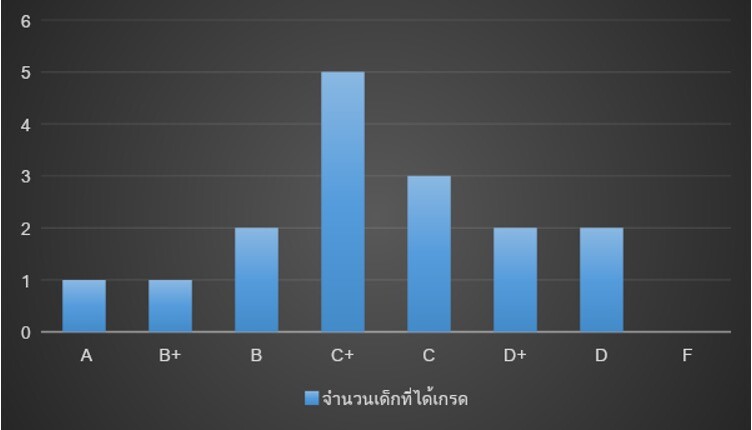
จากแผนการเรียนการสอน การวัดและประเมินสามารถสะท้อนถึงผลการเรียนรู้ที่คาดหวังโดยใช้เกณฑ์คะแนนหรือเกรดในการประเมินคุณภาพในแต่ละรายวิชา ดังกราฟตัวอย่างเกรดรายวิชา 223 221 Aerodrome Control Service ด้านล่าง
หลักฐาน
1. ระบบ MIS TQF 3 ของแต่ละรายวิชาที่เปิดทำการเรียนการสอนปีการศึกษา 2565
2. ระบบ MIS TQF 5 ของแต่ละรายวิชาที่เปิดทำการเรียนการสอนปีการศึกษา 2565
3.2 The teaching and learning activities are shown to allow students to participate responsibly in the learning process.
การดำเนินการ
การเรียนการสอนในสาขาวิชาการควบคุมจราจรทางอากาศในกลุ่มวิชาชีพบังคับมีการจัดการเรียนการสอนรายวิชาปฏิบัติ (Simulation Class) จำนวนหลายชั่วโมงต่อสัปดาห์ ทั้งเขตบริเวณโดยรอบสนามบิน (Aerodrome Control Service) เขตประชิดสนามบิน (Approach Control Service) ทั้งใช้และไม่ใช้เรดาร์ และเขตเส้นทางการบิน (Area Control Service) ซึ่งเน้นให้ผู้เรียนเป็นผู้ปฏิบัติในการจำลองการควบคุมจราจรทางอากาศ โดยนักศึกษาทุกคนจะได้มีส่วนร่วมในกิจกรรมการเรียนการสอนในรายวิชาปฏิบัติเหล่านี้ ไม่ว่าจะเป็นตำแหน่ง Local Controller หรือผู้ที่ทำหน้าที่ให้คำอนุญาตให้นักบินทำการบินขึ้นหรือร่อนลงยังสนามบิน ตำแหน่ง Ground Controller หรือผู้ที่ทำหน้าที่ให้คำอนุญาตนักบินในการขับเคลื่อนอากาศยานบนภาคพื้น ตำแหน่ง Local Assistance หรือผู้ที่ทำหน้าที่คอยประสานกับหน่วยงานต่าง ๆ เกี่ยวข้อมูลการบินของแต่ละเที่ยวบินก่อนทำการวิ่งขึ้นหรือหลังจากลงจอด ตำแหน่ง Pilot หรือนักบิน คือ ผู้ที่จะคอยพูดโต้ตอบและสร้างปัญหาหรือสถานการณ์จำลองต่าง ๆ ให้กับเพื่อนนักศึกษาด้วยกันในการปัญหาระหว่างการฝึกปฏิบัติ โดยนักศึกษาทุกคนจะได้ทำในทุก ๆ ตำแหน่ง และสลับกันไปเรื่อย ๆ เสมือนปฏิบัติงานจริง เพื่อสร้างความคุ้นเคยเกี่ยวกับวิธีการปฏิบัติงานบนหอบังคับการบินจริง ซึ่งการเรียนการสอนในรายวิชาปฏิบัติเหล่านี้ นักศึกษาจะต้องมีความสามัคคีกันเป็นอย่างมาก เพราะถ้าหากขาดใครคนใดคนหนึ่งไปก็จะไม่สามารถทำการเรียนการสอนหรือฝึกปฏิบัติได้ เนื่องจากตำแหน่งการไม่งานไม่สมบูรณ์ ดังนั้น ทั้งอาจารย์ผู้สอนและนักศึกษาจึงต้องมีระเบียบ วินัย และความรับผิดชอบเป็นอย่างมากในการเรียนการสอนรายวิชาปฏิบัติเหล่านี้ เพื่อให้การเรียนการสอนสามารถดำเนินไปได้ด้วยดีจนจบภาคการศึกษา
ตัวอย่างการติดต่อสื่อสารระหว่างนักบินและเจ้าหน้าที่ควบคุมจราจรทางอากาศ
ARRIVING AIRCRAFT FOR SIA123
A/C : BKK TWR, SIA123, 10 NM FINAL RWY 21R (Time initial contact 0905 UTC)
TWR : SIA123, BKK TWR,CONTINUE APPROACH RWY2IR REPORT FINAL APPROACH FIX OR OVER OUTER MARKER
A/C : CONTINUE APPROACH, RWY 21R, WILL REPORT FINAL APPROACH FIX (FAF) OR OVER OUTER MARKER, SIA123
A/C : BKK TWR, SIA123, OVER OUTER MARKER (TIME 0909 UTC)
TWR : SIA123, WIND240 DEGREES 10 KNOTS, RWY 21R CLEARED TO LAND
A/C : WIND 240 DEGREES 10 KNOTS, RWY 21R CLEARED TO LAND , SIA123
TWR : SIA123, VACATE RIGHT AT TWY “R” WHEN RWY VACATE CONTACT GROUND 121.9
A/C : (REPEAT), SIA123 (Landing Time 0912 UTC)
THE PILOT CHANGES FREQUENCY TO CONTACT GROUND
A/C : BKK GROUND, SIA123, RWY VACATE AT TAXIWAY “R”
GND : SIA123, BKK GROUND, TAXI TO STAND 41, VIA TWY “M, C and I”
A/C : READ BACK, SIA123
A/C : BKK GROUND, SIA123, PARKING COMPLETED.
GND : BKK GROUND ROGER.
DEPARTURE AIRCRAFT FOR AIQ321DEPARTURE INFORMATION (NO ATIS)
A/C: BKK GND, AIQ321, A330 (H) STAND36, REQUEST DEPARTURE INFORMATION AND ATC CLEARANCE TO NARITA AERODROME FL 330
GND: AIQ321, BKK GND, EXPECT DEPARTURE RWY 21R, WIND 240/12 KT QNH 1012 TEMPERATURE 25/23, VIS 8 KM. TIME 0040 ATC CLEARNCE ON REQUEST.
A/C: EXPECT DEPARTURE RWY 21R, WIND 240/12 KT QNH 1012 TEMPERATURE 25/23, VIS 8 KM. TIME 0040 ATC CLEARNCE ON REQUEST.
REQUEST ATC CLEARANCE FROM ACC (USE SID)
TWR: BKK ACC, BKK TWR, REQUEST ATC CLEARANCE FOR AIQ321 TO NARITA AERODROME FL330
ACC: BKK CONTROL CLEAR AIQ321 to NARITA AERODROME VIA A1 (FPR), MAINTAIN FL330, READ BACK.
TWR: READ BACK
NOTE: AFTER RECEIVED ATC CLEARANCE FROM ACC, TWR ASST FORWARD TO APP, APP WILL ASSIGN STANDARD INSTRUMENT DEPARTURE AND SQUAWK CODE
TWR: APP, TWR, ATC CLEARANE FOR THA601
APP: TWR, APP READY TO COPY
TWR: AIQ321 IS CLEARD TO NARITA AERODROME, VIA A1 (FPR), MAINTAIN FL330
APP: AIQ321 IS CLEARED TO NARITA AERODROME, VIA A1 MAINTAIN FL330 GRANK2 DEPARTURE SELKA TRANSITION, SQUAWK 0701
TWR: READ BACK
ATC CLEARANCE FORWARD TO AIRCRAFT
GND: AIQ321, ATC CLEARANCE AVAILABLE ARE YOU READY TO COPY?
A/C: BKK GND, AIQ321, READY TO COPY
GND: AIQ321 IS CLEARED TO NARITA AERODROME VIA A1 (FPR) MAINTAIN FL330 GRANK2 DEPARTURE SELKA TRANSITION, SQUAWK 0701
A/C: READ BACK
GND: AIQ321 READ BACK CORRECT ADVISE WHEN READY TO PUSH BACK AND START UP
A/C: WILL ADVISE WHEN READY TO PUSH BACK AND START UP, AIQ321
START UP AND PUSH BACK CLEARANCE
A/C: BKK GND, AIQ321, AT STAND 36 REQUEST PUSH BACK AND START UP
GND: AIQ321, PUSH BACK AND START UP APPROVED, HEADING NORTH ON TWY “B”
A/C: READ BACK
TAXI INSTRUCTION CLEARANCE
A/C: BKK GND, AIQ321, ON TAXIWAY “B” READY TO TAXI
GND: AIQ321, TAXI TO HOLDING POINT RWY21R VIA “B, F, C, AND D” RWY 21R
A/C: READ BACK
GND: AIQ321, HOLD SHORT OF RWY 21 R, WHEN READY FOR DEPARTURE CONTACT TWR 118.1
A/C: ROGER, HOLD SHORT OF RWY 21R, WHEN READY FOR DEPARTURE CONTACT TWR 118.1, AIQ321
TAKE OFF CLEARANCE
A/C: BKK TWR, AIQ321, AT HOLDING POINT RWY 21 R, NOW READY FOR DEPARTURE
TWR: AIQ321, BKK TWR, AFTER DEPARTURE (MAINTAIN 3000 FEET INITIALLY) CONTACT BKK APP 119.1 WIND 240 DEGREES 10 KNOTS, RWY 21R CLEAR FOR TAKE OFF
A/C: READ BACK
หลักฐาน
1. ภาพบรรยากาศการเรียนการสอนในห้องจำลองปฏิบัติการควบคุมจราจรทางอากาศ
2. แผนการสอน กิจกรรม และ งานที่มอบหมาย
3. Phraseology
4. Exercise
3.3 The teaching and learning activities are shown to involve active learning by the students.
การดำเนินการ
สาขาวิชาฯ ให้ผู้เรียนมีส่วนร่วมในการออกแบบกิจกรรมการเรียนรู้ โดยให้เลือกกิจกรรมการเรียนรู้ที่แตกต่างกัน เช่น การเรียนรู้ผ่านสถานการณ์จำลอง การฝึกปฏิบัติการควบคุมจราจรทางอากาศจำลอง การเรียนรู้แบบโครงงาน การเรียนรู้แบบบูรณาการดูงานนอกสถานที่ เพื่อเพิ่มพูนทักษะ ความรู้และสัมผัสกับประสบการณ์และสถานการณ์จริง โดยในปีการศึกษา 2566 ที่ผ่านมา ได้นำนักศึกษาเข้าไปเยี่ยมชมศึกษาดูงานเยี่ยมชมหอบังคับการบินสระพรานนาค ค่ายสมเด็จพระศรีนครินทรา ต.เขาพระงาม อ.เมือง จ.ลพบุรี ของนักศึกษาสาขาวิชาการควบคุมจราจรทางอากาศ ชั้นปีที่ 1 2 และ 3 เพื่อให้นักศึกษาได้เห็นการปฏิบัติจริง ของเจ้าหน้าที่ ATC ในการควบคุมอากาศยานของเหล่าศิษย์การบินทหารบก และเป็นการบูรณาการความรู้ควบคู่ไปกับการเรียนการสอนในรายวิชา 223 221 การควบคุมจราจรทางอากาศสนามบิน (Aerodrome Control Service) และรายวิชา 223 222 ปฏิบัติการจำลองการควบคุมจราจรทางอากาศสนามบิน (Aerodrome Control Simulation)
ภายหลังการดูงานนอกสถานที่และการเรียนในรายวิชาปฏิบัติการจำลองการควบคุมจราจรทางอากาศสนามบิน (Aerodrome Control Simulation) ตัวแทนนักศึกษาสาขาวิชาการควบคุมจราจรทางอากาศและอาจารย์ประจำสาขาวิชาฯ ได้มีโอกาสไปถ่ายทอดความรู้และประสบการณ์ เรื่อง การควบคุมจราจรทางอากาศให้แก่เหล่าผู้เข้ารับการฝึกอบรมผู้บังคับบัญชาลูกเสือเหล่าอากาศ ณ โรงเรียนราชวินิตบางแก้วในพระบรมราชูปถัมภ์ วันที่ 28-29 กันยายน 2566 ที่ผ่านมา เพื่อเป็นการปลูกฝังให้นักศึกษาฯ สามารถนำความรู้ ความสามารถที่ได้เรียนมาไปใช้ให้เกิดประโยชน์ทั้งต่อตนเองและผู้อื่น ร่วมถึงฝึกให้นักศึกษาฯ กล้าที่จะแสดงออกและมีภาวการณ์เป็นผู้นำในการดำเนินกิจกรรม เพื่อฝึกให้นักศึกษาสามารถเข้าใจแนวทางในการปฏิบัติงานร่วมกับผู้อื่นหรือองค์กรอื่นได้ พร้อมทั้งสามารถวางแผนงานได้อย่างละเอียดรอบคอบ ทั้งก่อนการดำเนินกิจกรรม ระหว่างดำเนินกิจกรรม และสรุปผลหลังจากดำเนินกิจกรรมได้อย่างเป็นระบบ และที่สำคัญเพื่อเผยแพร่ ประชาสัมพันธ์ชื่อของมหาวิทยาลัยนานาชาติเซนต์เทเรซา และหลักสูตรสาขาวิชาการควบคุมจราจรทางอากาศ (Air Traffic Control Program) ให้เป็นที่รู้จักแก่สาธารณะและผู้ที่สนใจ
หลักฐาน
1. โครงการ “ศึกษาดูงานเพื่อเสริมสร้างประสบการณ์ในการเรียนของนักศึกษา” กิจกรรม “เยี่ยมชมหอบังคับการบินสระพรานนาค ค่ายสมเด็จพระศรีนครินทรา ต.เขาพระงาม อ.เมือง จ.ลพบุรี ของนักศึกษาสาขาวิชาการควบคุมจราจรทางอากาศ ชั้นปีที่ 1 2 และ 3”
2. รายงานผลโครงการทัศนะศึกษาดูงาน นักศึกษาสาขาวิชาการควบคุมจราจรทางอากาศ
3. โครงการ บริการทางวิชาการการอบรมผู้บังคับบัญชาลูกเสือเหล่าอากาศ ณ โรงเรียนราชวินิตบางแก้วในพระบรมราชูปถัมภ์
3.4 The teaching and learning activities are shown to promote learning, learning how to learn, and instilling in students a commitment for life-long learning (e.g., commitment to critical inquiry, information-processing skills, and a willingness to experiment with new ideas and practices).
การดำเนินการ
กิจกรรมการเรียนการสอนในสาขาวิชาการควบคุมจราจรทางอากาศ โดยเฉพาะกลุ่มวิชาชีพบังคับ เน้นให้นักศึกษามีกระบวนการคิดวิเคราะห์ที่รอบคอบในการควบคุมจราจรทางอากาศ เพื่อให้บรรลุวัตถุประสงค์ของการให้บริการควบคุมจราจรทางอากาศที่ว่า 1. เพื่อป้องกันการชนกันระหว่างอากาศและอากาศยาน 2. เพื่อป้องกันการชนกันระหว่างอากาศยานบนพื้นที่ในสนามบินที่ใช้สำหรับการวิ่งขึ้น-ลงของเครื่องบิน (Runway) การเคลื่อนตัวบนพื้นที่ทางขับ (Taxiway) 3. เพื่อความรวดเร็วและรักษาความคล่องตัวของการจราจรทางอากาศตามมาตรฐานของ ICAO โดยเน้นให้นักศึกษามีการอ่านทำความความเข้าใจเกี่ยว Standard Phraseology กฎ ระเบียบ และวิธีปฏิบัติต่าง ๆ มาก่อนเข้ารับการฝึกปฏิบัติในห้องจำลองการควบคุมจราจรทางอากาศ และในระหว่างการฝึกปฏิบัติจะเน้นให้นักศึกษาพูดสื่อสาร Standard Phraseology กับเพื่อนที่เป็นนักบิน เพื่อฝึกการออกเสียง การเขียน และฟังทำความเข้าใจระหว่างการสื่อสารผ่านวิทยุ (Radiotelephony) เพื่อให้นักศึกษามีกระบวนการคิด วิเคราะห์ที่เป็นขั้นตอนและเป็นระบบ และเป็นการช่วยให้นักศึกษาเกิดการเรียนรู้ตลอดชีวิตในด้านกระบวนการคิด วิเคราะห์ แยกแยะ และลำดับความสำคัญก่อนหลังของแต่ละสถานการณ์ หรือในแต่ละเที่ยวบินให้เกิดความปลอดภัยและเหมาะสม
ตัวอย่างกิจกรรมการเรียนการสอนในด้านการคิด วิเคราะห์ และแยกแยะ
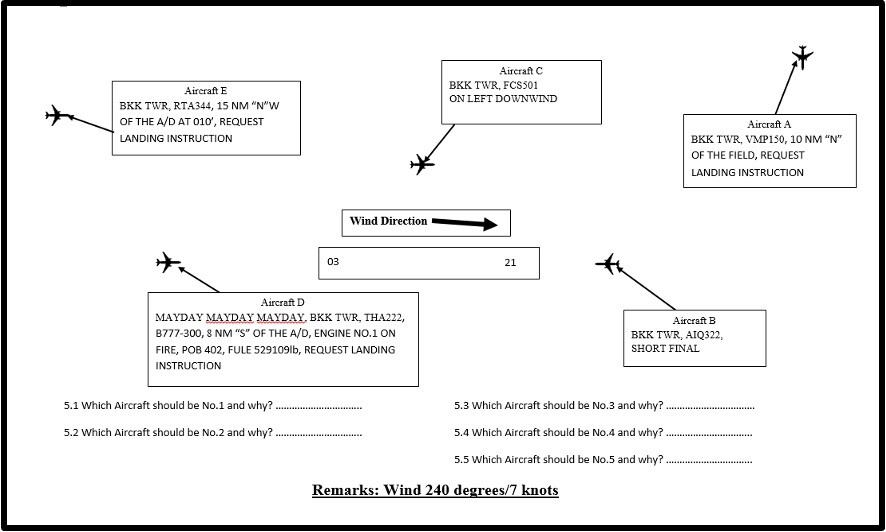
กิจกรรมนี้จะให้นักศึกษาทำการดู อ่าน คิด และวิเคราะห์ถึงสถานการณ์ในขณะนี้ว่าอากาศลำดับใดควรจะเข้ามาทำการลงจอดเป็นลำดับที่ 1 2 3 4 และ 5 ตามลำดับ พร้อมด้วยเหตุผลว่าทำไมอากาศยานลำดังกล่าวถึงมีสิทธิ์ในลงจอดเป็นลำดับที่ 1 2 3 4 และ 5
โดยนักศึกษาจะต้องพิจารณาและอ่านทำความเข้าใจถึงความต้องการของนักบินในแต่ละเที่ยวบินก่อนว่าต้องการจะสื่อสารอะไรออกมาให้ ATC ช่วยเหลือก่อนการลงจอด ภายหลังอ่านทำความเข้าใจเสร็จแล้ว นักศึกษาจะต้องวิเคราะห์ได้ว่าสถานการณ์ในขณะนี้เกิดอะไรขึ้น และอากาศยานลำไหนที่ต้องการความช่วยเหลือเร่งด่วนในการลงจอด และจะให้อากาศยานลำอื่น ๆ ดำเนินการอย่างไรต่อไปก่อนเข้ามาลง หรือในกรณีที่อากาศยานไม่สามารถลงจอด ณ สนามบินแห่งนี้ได้ นักศึกษาจะให้คำสั่งหรือช่วยเหลือนักบินในแต่ละเที่ยวบินอย่างไร เพื่อให้เกิดความปลอดภัย ราบรื่น และเหมาะสมที่สุดแก่ทุกฝ่ายที่มีส่วนเกี่ยวข้อง
หลักฐาน
1. กิจกรรมการเรียนการสอนในด้านการคิด วิเคราะห์ และแยกแยะ
3.5 The teaching and learning activities are shown to inculcate in students, new ideas, creative thought, innovation, and an entrepreneurial mindset.
การดำเนินการ
สาขาวิชาฯ มีการส่งเสริมการเรียนรู้เพื่อปลูกฝังให้ผู้เรียนมีความคิดสร้างสรรค์ และการเป็นผู้ประกอบการ โดยได้ส่งเสริมให้นักศึกษาได้นำสิ่งของอุปกรณ์ที่มีอยู่แล้วและอุปกรณ์ที่เหลือใช้ในห้องปฏิบัติการจำลองทางอากาศไปรังสรรค์ผลงานให้เกิดความแปลกใหม่และใช้สิ่งของที่มีอยู่ให้เกิดประโยชน์สูงสุด ดังนี้
| รายวิชา และ กิจกรรม | New ideas, Creative thought, Innovation, and an Entrepreneurial Mindset |
| 1. 223 221 Aerodrome Control Service and 223 222 Aerodrome Control Simulation | 1. นักศึกษาได้นำเครื่องบินและหอบังคับการบินจำลองที่ใช้ในการเรียนการสอนไปประดิษฐ์เป็นพานไหว้ครู 2. นักศึกษาได้นำกระดาษลูกฟูกที่เหลือใช้ไปประดิษฐ์เป็นอาคารผู้โดยสาร อาคารเทียบเครื่องบิน อาคารซ่อมบำรุงอากาศยาน เพื่อใช้ในรายวิชาฝึกปฏิบัติการควบคุมจราจรทางอากาศและใช้ทดแทนของเดิมที่ชำรุดพังเสียหาย 3.นักศึกษาได้นำกล่องขนมปีโป้มาทำเป็นถุงลมที่ใช้ในการมองเห็นของอากาศบนโต๊ะจำลองการปฏิบัติการทางอากาศ และนำกล่องยามาดัดแปลงเป็นอาคารปฏิบัติการทหารอากาศแปดแฉก |
| 2. กิจกรรม Intercultural Variety show | 1. นักศึกษาได้มีความคิดสร้างสรรค์เกี่ยวกับการทำโชว์จากประเทศต่าง ๆ ที่ได้รัมอบหมาย เช่น ประเทศจีน เวียดนาม แอฟริกา ตุรกี และฮังการี เพื่อส่งเสริมความเข้าใจด้านวัฒนธรรมต่าง ๆ จากทั่วโลก |
| 3. โครงการส่งเสริมและพัฒนาทักษะด้านการบินครั้งที่ 1 Safety and Innovation หัวข้อ การบูรณาการนิรภัยการบินด้วยนวัตกรรม | 1. นักศึกษาได้เพิ่มพูนแลกเปลี่ยนประสบการณ์ ความรู้ และทักษะในด้านนิรภัยการบิน และเพื่อเป็นการร่วมมือแลกเปลี่ยนองค์ความรู้ ระหว่างสถาบันต่าง ๆ ด้านการบินทั่วประเทศ โดยมีการจัดการแข่งขันเกี่ยวกับนวัตกรรมและเทคโนโลยีที่เกี่ยวข้องกับการด้านบิน และตัวแทนนักศึกษาชั้นที่ 3 และ 4 ของสาขาวิชาการควบคุมจราจรทางอากาศได้ใช้ความรู้ที่เรียนมานำมารังสรรค์เป็นผลงานนวัตกรรมด้านความปลอดภัยในการจัดการสภาวะอันตรายจากนกในด้านผู้ให้บริการด้านการบินพลเรือนและได้รับรางวัลร่วมกับสถาบันอื่นมาทั้งสิ้น 3 รางวัล ได้แก่ 1. รางวัลชนะเลิศอันดับที่ 1 2. รางวัลรองชนะเลิศอันดับที่ 1 3. รางวัล Popular Vote โดยนวัตกรรมนี้สามารถต่อยอดในการทำเป็นแอพลิเคชั่นและสามารถขายได้หากมีเงินทุนการวิจัยที่เพียงพอ ซึ่งจะสามารถส่งเสริมให้นักศึกษาสามารถต่อยอดเป็นอาชีพและส่งเสริมด้านการเป็นผู้ประกอบการในอนาคตได้ |
ซึ่งถือได้ว่ากิจกรรมต่าง ๆ เหล่านี้เป็นกิจกรรมที่สามารถดึงประสิทธิภาพ ความสามารถของนักศึกษาด้านความคิดสร้างสรรค์และการรังสรรค์นวัตกรรมใหม่ ๆ ออกมาใช้ได้อย่างเต็มที่ และถือเป็นผลงานความสำเร็จอีกอย่างหนึ่งของสาขาวิชาฯกับทางมหาวิทยาลัยฯอีกด้วย
หลักฐาน
1. Intercultural Variety show
2. การทำพานไหว้ครู
3. ถุงลม อาคารผู้โดยสาร อาคารปฏิบัติการทหารอากาศแปดแฉก
4. ผลงานนวัตกรรม Safety and Innovation หัวข้อ การบูรณาการนิรภัยการบินด้วยนวัตกรรม
5. โครงการส่งเสริมและพัฒนาทักษะด้านการบินครั้งที่ 1 Safety and Innovation
3.6 The teaching and learning processes are shown to be continuously improved to ensure their relevance to the needs of industry and are aligned to the expected learning outcomes.
การดำเนินการ
สาขาวิชาฯ ได้มีการเก็บรวบรวมข้อมูลจากผู้มีส่วนได้ส่วนเสีย เพื่อนำมาปรับปรุงหลักสูตรและพัฒนาการเรียนการสอนให้ได้คุณภาพตามผลการเรียนรู้ที่คาดหวังที่ระบุไว้ในหลักสูตร โดยได้ดำเนินการเรียนการสอนและสอดแทรกคุณสมบัติที่นักศึกษาพึ่งมีในระหว่างการเรียนการสอน เพื่อให้ได้นักศึกษาตรงตามที่ตลาดแรงงานต้องการ ดังตารางตัวอย่าง ต่อไปนี้
| การเรียนการสอน | ความต้องการของสถานประกอบการและอุตสาหกรรมการบิน | ผลการดำเนินการ |
| 1. การฝึกให้นักศึกษาทำงานเป็นทีม และมีภาวะการเป็นนำในระหว่างการทำงานกลุ่ม | สถานประกอบการต้องการนักศึกษาที่สามารถทำงานเป็นทีม และสามารถทำงานร่วมกับอื่นได้ ทั้งผู้ที่มีอายุน้อยกว่า และผู้ที่มีอายุมากกว่า | จากการสัมภาษณ์หัวหน้าผู้ดูแลและพี่เลี้ยงของนักศึกษาในระหว่างการฝึกปฏิบัติวิชาชีพ นักศึกษาสามารถทำงานเป็นเป็นทีมได้เป็นอย่างดี พร้อมทั้งมีความเคารพ และเชื่อฟังรุ่นพี่ที่มีอายุมากกว่าและเพื่อนร่วมงานจากมหาวิทยาลัยอื่น ๆ ได้อย่างไม่มีปัญหา |
| 2. การฝึกให้นักศึกษามีความตรงต่อเวลาในการเข้าเรียนและการส่งงานตามที่ได้รับมอบหมาย | สถานประกอบการต้องการบุคคลที่ตรงต่อเวลา และมีความรับผิดชอบเป็นสูง เนื่องในวงการอุตสาหกรรมบิน เวลาถือเป็นสิ่งสำคัญที่สุด หากเกิดการล่าช้าจะก่อให้เกิดความเสียหายอย่างมหาศาลต่อสายการบิน และผู้โดยสาร | จากการพูดคุยกับพี่เลี้ยงของนักศึกษาในขณะฝึกงาน สามารถสรุปผลได้ว่า นักศึกษาภายในสาขาวิชาฯ ไม่เคยมีพฤติกรรมในการมาเข้างานสาย และมีความรับผิดชอบต่องานที่ได้มอบหมายเป็นอย่างดี เนื่องจากอาจารย์ผู้สอนค่อนข้างเข้มงวดเรื่องเวลาเป็นอย่างมากในระหว่างการเรียนการสอน ทำให้นักศึกษาตระหนักได้ถึงความสำคัญของเวลา และติดเป็นนิสัยมาจนถึงปัจจุบัน |
| 3. การฝึกให้นักศึกษาเป็นคนมีไหวพริบปฏิภาณในการสังเกตและหาความรู้เข้าสู้ตนเองตลอดเวลา (Life Long Learning) | สถานประกอบการและอุตสาหกรรมการบิน ต้องการบุคลากรที่มีไหวพริบในการทำงาน ช่างสังเกตการ และหมั่นหาความรู้เข้าตัวตลอดเวลาเป็นอย่างมาก เนื่องจากจะสามารถช่วยให้องค์กรสามารถดำเนินงานได้อย่างราบรื่นและไม่มีปัญหา เพราะทุกคนจะสามารถช่วยกันแก้ไขปัญหาที่มีได้ทันเวลา หากมีสถานการณ์ใด ๆ เกิดขึ้น | โดยการสังเกตการของพี่เลี้ยงที่ฝึกงาน สามารถสรุปได้ว่า นักศึกษาของเรามีไหวพริบปฏิภาณ และการเอาตัวรอดในสถานการณ์ที่คับขันได้เป็นอย่างดี ทั้งนี้ อาจเนื่องมาจากการที่นักศึกษาได้ฝึกปฏิบัติการควบคุมจำลองจราจรทางอากาศมา ส่งผลให้นักศึกษาช่างสังเกตถึงเหตุการณ์ที่ไม่ปกติและสามารถแก้ไขปัญหาที่อาจจะเกิดขึ้นได้ทันเวลา เพราะว่าในการฝึกปฏิบัตินั้น นักศึกษาจะต้องติดต่อสื่อสารกับนักบิน ดูที่จอเรดาร์ และสื่อสารกับผู้ช่วยเรื่องการส่งและรับเครื่องจากหน่วยงานต่าง ๆ มาไว้ในความรับผิดชอบและดูแลต่อจากหน่วยงานอื่น ดังนั้นนักศึกษาจะได้ฝึกการทำงานหลาย ๆ อย่างในเวลาเดียว ซึ่งเป็นคุณสมบัติที่สถานประกอบการต้องการเป็นอย่างมาก |
และเปิดโอกาสให้ผู้ที่มีส่วนได้ส่วนเสียร่วมกันพัฒนาปรับปรุงสูตรให้ทันสมัย และผลิตบัณฑิตที่มีคุณภาพและประสิทธิภาพออกสู่ตลาดแรงงานด้วย
โดยตัวแทนศิษย์เก่าของสาขาวิชาฯ ได้เสนอแนะให้สาขาวิชาฯ ดำเนินการปรับรายวิชาที่ไม่ทันสมัยออก พร้อมทั้งอัพเดตเนื้อหาในรายวิชาให้มีความทันสมัยมากขึ้น เพื่อเพิ่มพูนองค์ความรู้ใหม่ ๆ ให้แก่นักศึกษาในอนาคตที่จะเข้ามาศึกษาต่อในสาขาวิชาฯนี้ ซึ่งทางสาขาวิชาฯ ได้นำข้อเสนอแนะนี้มาปรับปรุงเรียบร้อยแล้ว
ศิษย์ปัจจุบันของสาขาวิชาฯ กล่าวว่า อยากให้ทางหลักสูตรดำเนินการจัดหาอาจารย์ผู้เชี่ยวชาญเฉพาะด้านมาสอนในบางรายวิชา เพื่อมความรู้และความเข้าใจในรายวิชานั้น ๆ ทางสาขาวิชาฯ ได้ดำเนินการตามข้อเสนอแนะของนักศึกษาเรียบร้อยแล้ว โดยการเชิญอาจารย์ผู้เชี่ยวชาญด้านการบินจากภายนอกมาบรรยายร่วมอาจารย์ประจำหลักสูตร และอาจารย์ภายในมหาวิทยาลัยฯ อาทิ อาจารย์ ปรีชา สุขชัย อาจารย์จินตวัชร เพชรเรียง อาจารย์ ดร. ประพนธ์ จิตตะปุตตะ เป็นต้น เพื่อเป็นการแชร์ประสบการณ์และเทคนิคต่าง ๆ ให้นักศึกษามีความรู้ความเข้าใจมากยิ่งขึ้น
ผู้ประกอบการที่รับนักศึกษาเข้าฝึกงาน กล่าวว่า อยากให้ทางสาขาวิชาฯ ดำเนินการจัดเรียนการสอนโดยใช้โค้ดของ IATA ควบคู่ไปกับ ICAO ด้วย เนื่องจากทางด้านการบินมีตัวย่อหรือโค้ดย่อจำนวนมาก จึงอยากเสนอแนะให้ทางหลักสูตรดำเนินการจัดการเเรียนการสอนเรื่องตัวย่อหรือโค้ดย่อควบคู่กันไปด้วยกันระหว่าง IATA Codes และ ICAO Codes เพราะปัจจุบันทางสาขาวิชาฯ ดำเนินการเรียนการสอนโดยใช้โค้ดของ ICAO เป็นหลัก ทำให้นักศึกษาที่เขามาฝึกปฏิบัติวิชาชีพไม่ค่อยมีความคุ้นชินเรื่องตัวย่อหรือโค้ดย่อของ IATA มากนัก ส่งผลให้เวลาทำงานอาจเกิดความล่าช้าได้ เนื่องจากต้องกลับไปเปิดตำราเรียน หรือหาข้อมูลบนอินเทอร์เน็ตเพิ่มเติมก่อนการปฏิบัติงาน ทางสาขาวิชาฯ ได้ดำเนินการตามข้อเสนอแนะของผู้ประกอบการที่รับนักศึกษาเข้าฝึกงานเรียบร้อยแล้ว โดยการปรับเนื้อหาในรายวิชาต่าง ๆ ที่ต้องใช้โค้ดหรือตัวย่อในการเรียนการสอน ให้อาจารย์ผู้สอนใช้ทั้ง IATA Codes และ ICAO Codes ในระหว่างการเรียนการสอนด้วย อาทิ รายวิชา Airport Operations Management, Aeronautical Information Service, and Aerodrome Control Service, Aircraft Weight and Balance Control เป็นต้น เพื่อเป็นการเพิ่มพูนความรู้และสร้างความเคยชินให้แก่นักศึกษาในการใช้งานเมื่อต้องไปฝึกปฎิบัติงานหรือปฏิบัติงานในสถานที่จริง
สถานประกอบการที่รับบัณฑิตเข้าทำงานหรือผู้ใช้บัณฑิต กล่าวว่า อยากให้ทางสาขาวิชาฯ ฝึกให้นักศึกษาสามารถทำงานหลาย ๆ อย่างได้ในเวลาเดียวกัน และเน้นการทำงานเป็นทีม เนื่องจากในสถานที่ทำงานจริงนักศึกษาจะต้องทำงานร่วมกับผู้อื่น ทั้งผู้ที่มาอายุมากกว่า และผู้ที่มีอายุน้อยกว่า ดังนั้นหากนักศึกษาไม่สามารถปรับตัวหรือทัศนคติให้เข้ากับทีมได้ ก็จะเป็นเรื่องที่ยากมากสำหรับการทำงานในอนาคตเมื่อสำเร็จการศึกษา ซึ่งข้อเสนอแนะนี้ทางสาขาวิชาฯร่วมกับทางมหาวิทลัยฯได้ดำเนินการมาตลอด ไม่ว่าจะเป็นการเรียนการสอนในชั้นเรียน โดยเน้นให้นักศึกษาทำงานกันเป็นกลุ่ม ผลัดกันเป็นผู้นำและผู้ตาม
โดยทั้งหมดที่กล่าวมาในข้างต้น เพื่อให้การจัดการเรียนการสอนมีความทันสมัยและผลิตบัณฑิตที่มีคุณภาพออกสู่ตลาดแรงงานในอุตสาหกรรมการบิน ซึ่งสอดคล้องกับแผนยุทธศาสตร์ชาติ ฉบับที่ 13 พ.ศ. 2566 – 2570 ที่กล่าวว่า อุตสาหกรรมท่องเที่ยวมีบทบาทสำคัญในระบบเศรษฐกิจไทย และยังเป็นแหล่งสร้างรายได้สำคัญให้แก่เศรษฐกิจของประเทศทั้งทางตรงและทางอ้อม สามารถสร้างรายได้ให้กับประเทศไทย 2.99 ล้านล้านบาทหรือคิดเป็นร้อยละ 18 ของผลิตภัณฑ์มวลรวมในประเทศ ซึ่งประเทศไทยอยู่ในอันดับที่ 36 จาก 117 ประเทศ และอยู่ในอันดับที่ 35 จาก 117 ประเทศ ในปี 2562 โดยในปี 2564 พบว่า ประเทศไทยมีจุดแข็งสำคัญ ได้แก่ ด้านโครงสร้างพื้นฐานด้านการขนส่งทางอากาศ ที่อยู่ในอันดับที่ 13 ของโลก ดังนั้น จึงไม่น่าแปลกใจที่อุตสาหกรรมการบินจะต้องการบุคคลากรจำนวนมาก เพื่อรองรับการขยายตัวด้านการท่องเที่ยวและด้านการบินเป็นจำนวนมาก โดยทางสาขาวิชาฯได้มีการปรับปรุงรายวิชาที่มีอยู่ให้มีเนื้อหาที่ทันสมัยและสอดแทรกเนื้อหาให้มีความเข้มข้นมากขึ้น พร้อมทั้งปรับลดรายวิชาที่อาจจะไม่จำเป็นและล้าสมัยออกจากหลักสูตร เพื่อให้นักศึกษาได้มีความรู้ที่เหมาะสม ทันสมัย และสามารถนำความรู้ที่ได้ไปปฏิบัติงานหลังสำเร็จการศึกษา ตามคำชี้แนะของของผู้มีส่วนได้ส่วนเสีย
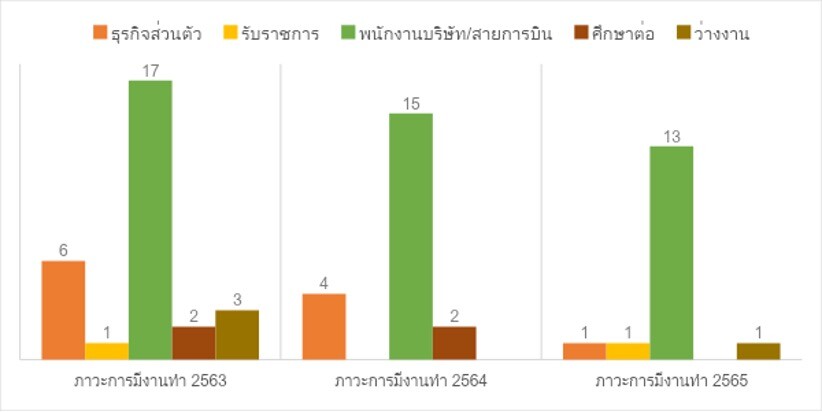
ซึ่งผลการเรียนรู้ที่คาดหวังในแต่ละรายวิชาและหลักสูตร สามารถวัดได้จากเกรดและภาวะการมีงานทำของบัณฑิตหลังจบการศึกษา และสาขาวิชาฯ มีอัตราภาวะการการมีงานทำสูงเกินกว่าร้อยละ 80 ของแต่รุ่นปีการศึกษา จึงสามารถสรุปได้ว่า หลักสูตรมีความทันสมัย สามารถผลิตบัณฑิตที่มีคุณภาพ ความรู้ และทักษะ ความต้องการได้ตรงกับความต้องการของตลาดแรงงานอุตสาหกรรมทั้งภายในและต่างประเทศ
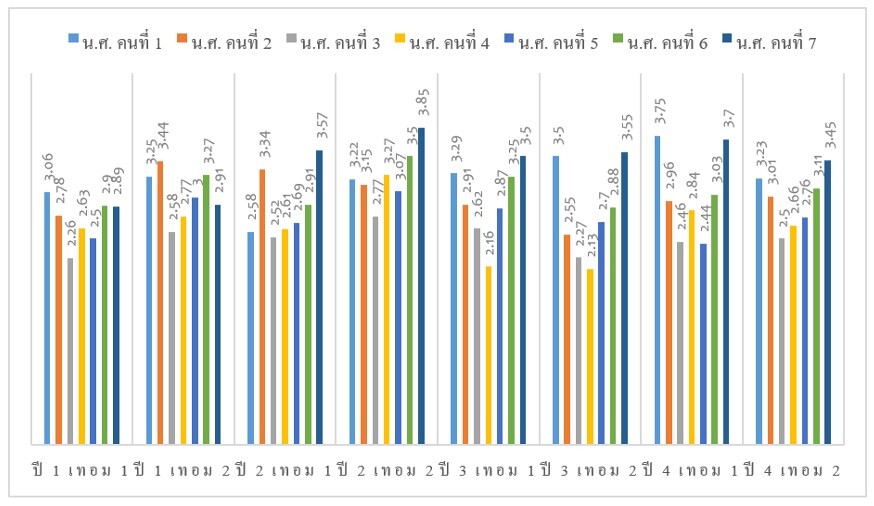
ผลการศึกษาตลอดหลักสูตร 4 ปี นักศึกษาสาขาวิชาการควบคุมจราจรทางอากาศ ปีการศึกษา 2565
ภาวะการมีงานทำ ATC ปี 2563 – 2565
หลักฐาน
1. ภาคผนวก ซ. ตารางเปรียบเทียบการปรับปรุงแก้ไขหลักสูตรเดิม พ.ศ. 2560 กับหลักสูตรปรับปรุง พ.ศ. 2565
2. CV อาจารย์พิเศษ
3. ตัวอย่างผลงานวิชา Aircraft Weight and Balance Control เกี่ยวกับตัวย่อหรือโค้ด
4. การพัฒนาผลการเรียนรู้ในแต่ละด้าน น.23
5. TQF3 ปีการศึกษา 2565
6. ผลการศึกษาตลอดหลักสูตร 4 ปี นักศึกษาสาขาวิชาการควบคุมจราจรทางอากาศ ปี การศึกษา 25657. ภาวะการมีงานทำ ATC ปี 2563 – 2565
7. ภาวะการมีงานทำ ATC ปี 2563 – 2565
Evidence
Self-Assessment
| Requirements | Result | Score |
| 3.1 The educational philosophy is shown to be articulated and communicated to all stakeholders. It is also shown to be reflected in the teaching and learning activities. | / | 1 |
| 3.2 The teaching and learning activities are shown to allow students to participate responsibly in the learning process. | / | 1 |
| 3.3 The teaching and learning activities are shown to involve active learning by the students. | / | |
| 3.4 The teaching and learning activities are shown to promote learning, learning how to learn, and instilling in students a commitment for life-long learning. | / | 1 |
| 3.5 The teaching and learning activities are shown to inculcate in students, new ideas, creative thought, innovation, and an entrepreneurial mindset. | / | 1 |
| 3.6 The teaching and learning processes are shown to be continuously improved to ensure their relevance to the needs of industry and are aligned to the expected learning outcomes. | / | 1 |
| Overall | 5 | |