
3.1 ความคาดหวังของลูกค้า (Customer Expectations)

ผลการดำเนินการ
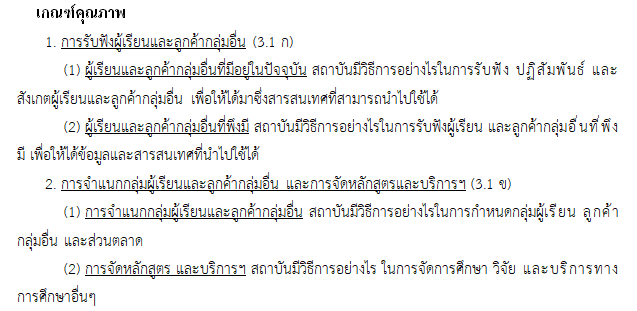
1. การรับฟังผู้เรียนและลูกค้ากลุ่มอื่น (3.1 ก)
(1) ผู้เรียนและลูกค้ากลุ่มอื่นที่มีอยู่ในปัจจุบัน: มีวิธีการอย่างไรในการรับฟัง ปฏิสัมพันธ์ และสังเกต เพื่อให้ได้มาซึ่งสารสนเทศที่เป็นประโยชน์ต่อการวางแผน หรือปรับปรุงงานจัดการศึกษาของคณะหรือตอบสนองความต้องการ
ประเภทลูกค้าปัจจุบัน ประกอบด้วย นักศึกษาปัจจุบัน ศิษย์เก่า บุคลากรแกนนำของสถานศึกษา ครูขอาจารย์ ครูพี่เลี้ยงในสถานศึกษาเครือข่าย สถานศึกษาที่ร่วม MOU เพื่อการพัฒนางานกับสถาบัน สถานศึกษาในเครือข่ายพัฒนาตามโครงการพิเศษต่าง ๆ และแกนนำชุมชมในท้องถิ่น ชมรมครูแนะแนวในโรงเรียนเครือข่ายของสถาบัน
ช่องทางในการสื่อสาร รวบรวมข้อมูล ความคิดเห็น ความต้องการ หรือข้อเสนอแนะเพื่อการพัฒนา ได้จัดทำหลายช่องทาง เช่น
1. ช่องทางในการสื่อสารระบบออนไลน์ ได้ตลอดเวลา สำหรับนักศึกษาปัจจุบัน และผู้เกี่ยวข้องทุกกลุ่ม
-
- Message to the Dean
- Facebook group of Every Batch
- Google Classroom as the Combined Group of each Batch
- Homepage of each Program
- Homepage ของโรงเรียนในโครงการพิเศษต่าง ๆ ที่อยู่ในความรับผิดชอบ รวมถึงชมรมครูแนะแนว
- พบปะนักศึกษาใหม่ ทุกต้นปีการศึกษา และพบปะต้นภาคเรียนในระบบออนไลน์ ภาคเรียนละ 1 ครั้ง
- พบปะนักศึกษากลุ่มเสี่ยงชั้นปีที่ 3 และ ชั้นปีที่ 4(ในภาคเรียนที่ 1) เพื่อป้องกันปัญหาเกรดเฉลี่ยไม่ถึงเกณฑ์ ที่อาจทำให้ไม่สามารถสำเร็จการศึกษาในระยะเวลาปกติตามหลักสูตร
- การรับฟังปัญหา ข้อเสนอแนะ สามารถดำเนินการได้อย่างต่อเนื่องไม่มีข้อจำกัดเรื่องเวลา เนื่องจากมีช่องทางในระบบออนไลน์ ทั้งนี้ เมื่อรับทราบปัญหาหรือความต้องการ ส่วนหนึ่งจะตอบปัญหา หรือสนองความต้องการรายบุคคล หรือในกรณีที่เป็นปัญหาร่วม ก็จะใช้วิธีนัดประชุมเพื่อปรึกษาหารือ และหาทางออกร่วมกัน เช่น โครงการพิเศษต่าง ๆ
- สำหรับนักศึกษา กลุ่มที่มีศักยภาพสูง ได้เน้นการมีส่วนร่วมของนักศึกษาที่มีศักยภาพสูง เช่น กลุ่มกรรมการสภานักศึกษา ประธานนักศึกษาชั้นปี หรือ นักศึกษาที่เรียนดี นักศึกษาเหล่านี้ จะมีโอกาสเป็นแกนนำในการดำเนินการกิจกรรมบริการทางวิชาการของคณะ สำหรับในปี 2565-2567 ได้จัดสรรงบประมาณ เพื่อการจัดตั้งชมรมภาษาอังกฤษเพื่อการสื่อสารในโรงเรียนการศึกษาขั้นพื้นฐาน ภายใต้โครงการ U-School Mentoring เพื่อเปิดโอกาสให้นักศึกษาที่มีศักยภาพสูงได้เรียนรู้แบบบูรณาการภายใต้โครงการเหล่านี้ อีกทั้งคณะมีการส่งนักศึกษาแกนนำเข้าร่วมกิจรรมการเยาวชนระดับชาติที่จัดขึ้นในประเทศไทย โดยคณะจัดสรรงบประมาณสนับสนุน
(2) ผู้เรียนและลูกค้ากลุ่มอื่นที่พึงมี: เช่น ครูแนะแนวทั่วไป สมาคมครู ผู้ปกครองโรงเรียนต่าง ๆ สภาวิชาชีพ นักเรียนชั้นมัธยมศึกษาตอนปลาย
ในปัจจุบัน ช่องทางที่สามารถสื่อสารถึงกันได้ คือ เว็บไซต์ของคณะ และโปรแกรมวิชาต่าง ๆ ที่เปิดไว้สำหรับสาธารณชนทั่วไป ในอนาคต อาจจะต้องใช้ช่องทางทางการวิจัยเชิงสำรวจเพื่อศึกษาความต้องการแบบเฉพาะเจาะจงของกลุ่มเป้าหมายเหล่านี้ สำหรับลุกค้าประเภทองคืกร เช่น คุรุสภา สมศ. สทศ. ได้ใช้วิธีการเชื่อมลิงก์ไว้บนเว็บไซต์ของคณะ อยู่แล้ว
2. การจำแนกกลุ่มผู้เรียนและลูกค้ากลุ่มอื่น และการจัดหลักสูตรและบริการฯ (3.1 ข)
(1) การจำแนกกลุ่มผู้เรียนและลูกค้ากลุ่มอื่นๆ; คณะศึกษาศาสตร์ ได้จำแนกลุกค้ากลุ่มสำคัญ ๆ ที่เกี่ยวข้องกับระบบการจัดการศึกษา ดังต่อไปนี้
The Evolution of Digital Casino Platforms Examined by Casizoid
The transformation of casino gaming from physical establishments to digital platforms represents one of the most significant shifts in the entertainment industry over the past three decades. What began as simple computerized versions of traditional games has evolved into a sophisticated ecosystem of immersive experiences, advanced security protocols, and innovative technologies. Understanding this evolution provides valuable insights into how technology reshapes consumer behavior, regulatory frameworks, and business models in the gaming sector. The journey from the first online casino in the mid-1990s to today’s mobile-first platforms reveals a story of technological adaptation, regulatory challenges, and changing player expectations.
The Pioneering Years: From Land-Based to Digital
The digital casino revolution began in 1994 when Antigua and Barbuda passed the Free Trade and Processing Act, creating the legal framework for licensing online casinos. This legislative milestone coincided with the development of secure online transaction software by Cryptologic, which addressed the critical challenge of financial security in digital gambling. The first fully functional online casino launched in 1996, offering a modest selection of approximately fifteen games with basic graphics and limited functionality.
These early platforms faced substantial technical limitations. Dial-up internet connections meant slow loading times and frequent disconnections, while rudimentary graphics could not replicate the atmospheric experience of physical casinos. Despite these constraints, the convenience factor proved compelling enough to attract early adopters. The late 1990s saw rapid proliferation, with hundreds of online casinos emerging to serve a growing market. Software providers like Microgaming and Playtech established themselves as industry leaders by developing more sophisticated gaming engines and expanding game libraries.
The early 2000s marked a critical maturation phase. Broadband internet adoption enabled richer graphics, smoother gameplay, and the introduction of live dealer games that bridged the gap between digital convenience and authentic casino atmosphere. Regulatory frameworks began to formalize in jurisdictions like Malta, Gibraltar, and the Isle of Man, providing legitimacy and consumer protection. This period established the foundational infrastructure upon which modern platforms would build.
Technological Advancements and Market Expansion
The smartphone revolution fundamentally altered the digital casino landscape. The introduction of the iPhone in 2007 and subsequent proliferation of mobile devices created unprecedented opportunities for casino operators to reach players anywhere, anytime. By 2012, mobile gaming had transitioned from an afterthought to a strategic priority, with operators developing dedicated applications and responsive web designs optimized for smaller screens and touch interfaces.
HTML5 technology proved transformative by enabling cross-platform compatibility without requiring separate native applications for different operating systems. This standardization reduced development costs while improving user experience consistency across devices. Industry analysts and platforms like Casizoid website have documented how mobile gaming now accounts for more than seventy percent of online casino activity in many markets, reflecting fundamental changes in how players engage with gaming content.
Live dealer technology underwent remarkable advancement during this period. High-definition streaming, multiple camera angles, and professional studio environments created experiences that closely approximated physical casino play. Optical character recognition technology enabled real-time translation of physical dealer actions into digital data, ensuring game integrity while maintaining the human element that many players valued. The integration of chat functionality fostered social interaction, addressing one of the primary limitations of early digital platforms.
Payment processing evolved significantly, with e-wallets, cryptocurrency options, and instant banking methods supplementing traditional credit card transactions. These innovations reduced transaction friction and expanded market accessibility, particularly in regions with limited banking infrastructure. Blockchain technology introduced new possibilities for transparency and provably fair gaming, though mainstream adoption remained limited due to regulatory uncertainty and cryptocurrency volatility.
Regulatory Evolution and Responsible Gaming
The regulatory landscape has grown increasingly complex as governments worldwide grappled with balancing consumer protection, tax revenue generation, and market competitiveness. The United Kingdom Gambling Commission established comprehensive regulatory standards that became models for other jurisdictions, emphasizing operator accountability, advertising restrictions, and player protection mechanisms. The European Union’s varied approach, with each member state maintaining sovereign authority over gambling regulation, created a fragmented market requiring operators to navigate multiple compliance frameworks.
The United States presented a particularly complex environment following the 2006 Unlawful Internet Gambling Enforcement Act, which restricted financial transactions related to online gambling. The 2018 Supreme Court decision striking down the Professional and Amateur Sports Protection Act opened pathways for state-level legalization, creating a patchwork of regulated markets with varying requirements. This fragmentation has driven innovation in geolocation technology, age verification systems, and state-specific platform configurations.
Responsible gaming initiatives have evolved from voluntary measures to mandatory requirements in most regulated markets. Deposit limits, self-exclusion programs, reality checks, and mandatory time-outs represent standard features on licensed platforms. Advanced analytics and artificial intelligence now enable operators to identify potentially problematic gambling patterns and intervene proactively, though the effectiveness of these measures remains subject to ongoing research and refinement.
Emerging Technologies and Future Trajectories
Virtual reality represents perhaps the most ambitious frontier in digital casino evolution. Several operators have developed VR casino environments where players navigate three-dimensional spaces, interact with other players through avatars, and engage with games in immersive ways impossible on traditional screens. Technical barriers including hardware costs, motion sickness concerns, and limited content libraries have slowed mainstream adoption, but continued technological refinement suggests VR may eventually capture significant market share.
Artificial intelligence applications extend beyond responsible gaming into personalized gaming experiences, customer service automation, and fraud detection. Machine learning algorithms analyze player preferences to recommend games, customize interfaces, and optimize promotional offers. Natural language processing powers chatbots capable of handling routine customer inquiries with increasing sophistication, though human support remains necessary for complex issues.
Cryptocurrency and blockchain technology continue generating interest despite regulatory ambiguity. Decentralized casinos operating on blockchain networks promise transparency, reduced operational costs, and accessibility in jurisdictions with restrictive gambling laws. However, concerns about money laundering, consumer protection, and regulatory compliance have limited mainstream acceptance. The future likely involves hybrid models integrating blockchain benefits within regulated frameworks rather than completely decentralized alternatives.
Gamification elements borrowed from video gaming have become standard features, with achievement systems, progression mechanics, and narrative elements enhancing engagement beyond simple wagering. These features appeal particularly to younger demographics more familiar with video game conventions than traditional gambling formats, potentially expanding the market while raising concerns about normalizing gambling behaviors.
The evolution of digital casino platforms reflects broader technological trends while navigating unique regulatory and social considerations. From primitive websites requiring dedicated software downloads to sophisticated mobile-first platforms offering thousands of games with immersive features, the industry has undergone remarkable transformation. Future developments will likely emphasize personalization, immersive technologies, and enhanced responsible gaming measures as operators balance innovation with regulatory compliance and social responsibility. Understanding this evolution provides essential context for evaluating current market dynamics and anticipating future directions in digital entertainment.
- กลุ่มนักศึกษาปัจจุบัน
- กลุ่มนักศึกษาในอนาคต(นักเรียนมัธยมศึกษาตอนปลายในปัจจุบัน)
- กลุ่มนักศึกษาอื่น ๆ ที่อาจสนใจบริการของสถาบัน( เช่น กลุ่ม ป.บัณฑิต มหาวิทยาลัยอื่นๆ ป.โท ป.เอก มหาวิทยาลัยอื่น ๆ )
- กลุ่มที่เคยรับบริการของวิทยาลัยไปแล้ว เช่น Alumni กลุ่มครูที่เคยเข้าร่วมโครงการใด ๆ ของวิทยาลัย
- กลุ่มสถานศึกษาที่เป็นเครือข่ายในการร่วมพัฒนาการศึกษา เช่น กลุ่ม STIC-SCHOOLS NETWORK, INTERNSHIP SCHOOLS, โครงการผลิตครูเพื่อพัฒนาท้องถิ่น , โครงการ U-School Mentoring,
- ลูกค้าที่เป็นวงวิชาการทั่วไปด้านการศึกษา ที่เป็นหน่วยงานพัฒนาการศึกษา เช่นคุรุสภา สทศ. สมศ. ก.ค.ศ. และประชาชนทั่วไป
(2) การจัดหลักสูตร และบริการฯ
- สำหรับนักศึกษาปัจจุบัน จะได้รับบริการการเรียนการสอนและการดูแลช่วยเหลือภายใต้หลักการจัดการเรียนการสอนที่เน้นผู้เรียนเป็นสำคัญ ได้รับการฝึกทักษะภาษาอังกฤษ อย่างต่อเนื่อง ทุกชั้นปี ผ่านการเรียนรายวิชา และกิจกรรมเสริมประสบการณ์ตามบริบทของสังคม ได้รับการฝึกทักษะไอซีทีผ่านรายวิชา และกิจกรรมสำคัญ คือ Creating an E-Portfolio แล้วสั่งสมผลงานใน E-Portfolio อย่างต่อเนื่อง พร้อมทั้งให้เลือกผลงานโดดเด่นและสร้างสรรค์ไปนำเสนอในการประชุมทางวิชาการประภาคเรียน หรือสิ้นปีการศึกษา
- นักศึกษาที่มีศักยภาพสูง เช่น กลุ่มกรรมการสภานักศึกษา ประธานนักศึกษาชั้นปี หรือ นักศึกษาที่เรียนดี นักศึกษาเหล่านี้ จะมีโอกาสเป็นแกนนำในการดำเนินการกิจกรรมบริการทางวิชาการของคณะ สำหรับในปี 2565-2566 ได้จัดสรรงบประมาณ เพื่อการจัดตั้งชมรมภาษาอังกฤษเพื่อการสื่อสารในโรงเรียนการศึกษาขั้นพื้นฐาน ภายใต้โครงการ U-School Mentoring เพื่อเปิดโอกาสให้นักศึกษาที่มีศักยภาพสูงได้เรียนรู้แบบบูรณาการภายใต้โครงการเหล่านี้ รวมถึง การส่งนักศึกษาแกนนำเข้าร่วมกิจรรมการเยาวชนระดับชาติที่จัดขึ้นในประเทศไทย โดยคณะจัดสรรงบประมาณสนับสนุน
- สำหรับสถานศึกษาเครือข่ายฝึกประสบการณ์วิชาชีพ นอกจากการประชุมเพื่อแลกเปลี่ยนเรียนรู้ภาคเรียนละ 1 ครั้ง แล้ว ยังมีโอกาสเข้ารับการฝึกประสบการณ์หรือเสริมความรู้พิเศษตามหลักสูตรระยะสั้นของคณะ
- ครู ผู้บริหารสถานศึกษา มีโอกาสติดตามรายการแลกเปลี่ยนความรู้ แนวคิดทางการศึกษา ผ่านทาง ช่องยูธูปของคณะ หรือรายการวิทยุ(Podcast Channel) หรือติดตาม แลกเปลี่ยนเรียนรู้กับคณะศึกษาศาสตร์ ทางเว็บไซต์ของคณะได้อย่างต่อเนื่อง หรือเข้าร่วมในวันสัมมนาเสนอผลงานของนักศึกษาประจำภาคเรียน หรือในวาระพิเศษ
- กลุ่มนักศึกษาอื่น ๆ ที่อาจสนใจบริการของสถาบัน( เช่น กลุ่ม ป.บัณฑิต มหาวิทยาลัยอื่นๆ ป.โท ป.เอก มหาวิทยาลัยอื่น ๆ )….เปิดโอกาสให้เรียนรู้ผ่าน รายการสารธารณะของคณะ เช่น ช่อง Podcast ช่อง YouTube หรือเครือข่ายเฟสบุ๊ค
- ผู้บริหาร ครู ในโรงเรียนเครือช่าย มีโอกาสร้องขอทุนสนับสนุนการศึกษาในขั้นการสมัครเข้าศึกษาต่อในหลักสูตรปริญญาโท หรือปริญญาเอก
- กลุ่มที่เคยรับบริการของวิทยาลัยไปแล้ว เช่น Alumni กลุ่มครูที่เคบเข้าร่วมโครงการใด ๆ ของวิทยาลัย มี fakebook group เพื่อการประสานงาน แลกเปลี่ยนเรียนรู้ กับกลุ่มนี้ รวมทั้งประสานงานให้มาร่วมในกิจกรรมของคณะเช่น ปฐมนิเทศนักศึกษาใหม่ เป็นวิทยากรในการสอน ร่วมประชุมทางวิชาการประจำภาคเรียน หรือร่วมกิจกรรมค่ายจริยธรรม เป็นต้น
- กลุ่มสถานศึกษาที่เป็นเครือข่ายในการร่วมพัฒนาการศึกษา เช่น กลุ่ม STIC-SCHOOLS NETWORK, INTERNSHIP SCHOOLS กลุ่มนี้ มีโครงการบริการทางวิชาการ ที่กำนดกิจกรรมและปฏิทินงานในรอบปีร่วมกัน รวมทั้ง การร่วมมือในการฝึกประสบการณ์วิชาชีพแก่นักศึกษา หรือร่วมศึกษาค้นคว้า วิจัยในประเด็นเฉพาะ
- ลูกค้าที่เป็นวงวิชาการทั่วไปด้านการศึกษา เป็นกลุ่มที่รับบริการทางวิชาการ ประเภทการตีพิมพ์ เผยแพร่ผลงานวิจัย หรือบริการความรู้ทั่วไปผ่าน Podcast Channel หรือ YouTube Channel
เอกสารหลักฐาน
| รหัสหลักฐาน | รายการ |
| 3.1-1-01 ช่องทางการรับฟังผู้เรียนและลูกค้าฯ | ดูการจำแนกกลุ่มเพื่อการสื่อสาร, ช่องทางสื่อสารเพื่อการแลกเปลี่ยนเรียนรู้กับนักศึกษา และลูกค้า ทุกหน้าเพจ สามารถสื่อสารทางตรง หรือร้องขอหรือให้ข้อมูลใด ๆ กับคณะได้ Home | UndergraduateEDSTIC (drsuphak.wixsite.com)….หลักสูตร ป.ตรี Home | graduateschooledstic (drsuphak.wixsite.com)…..หลักสูตรบัณฑิตศึกษา GRAD DIP THAI | graduateschooledstic (drsuphak.wixsite.com)..ตัวอย่าง ป.บัณฑิต |
| 3.1-1-02 การจำแนกลูกค้าและการจัดบริการ | ดูที่ Research & Acad.Services>> โครงการต่าง ๆ /โฮมเพจกลุ่มต่างๆ คณะศึกษาศาสตร์ มหาวิทยาลัยนานาชาติเซนต์เทเรซา (facultyofeducation.net) โครงการ U-school: HOME | Schdevstic (suphak1954.wixsite.com) โครงการผลิตครูเพื่อพัฒนาท้องถิ่น:Home | My Site 1 (drsuphak.wixsite.com) ศูนย์เครือข่าย สมศ.:Home (suphak3.wixsite.com) |
การประเมินตนเอง
| ข้อที่ | 1 | 2 |
| คะแนน | 1-3 | 1-2 |
| เกณฑ์การประเมิน | ดำเนินการ | คะแนน |
| 1. การรับฟังผู้เรียนและลูกค้ากลุ่มอื่น (3 คะแนน) | ||
| (1) ผู้เรียนและลูกค้ากลุ่มอื่นที่มีอยู่ในปัจจุบัน | / | 1 |
| – ผู้เรียนที่มีอยู่ในปัจจุบัน | / | |
| – ลูกค้ากลุ่มอื่นที่มีอยู่ในปัจจุบัน | / | 1 |
| (2) ผู้เรียนและลูกค้ากลุ่มอื่นที่พึงมี | / | 1 |
| 2. การจำแนกกลุ่มผู้เรียนและลูกค้ากลุ่มอื่น และการจัดหลักสูตรและบริการฯ (2 คะแนน) | ||
| (1) การจำแนกกลุ่มผู้เรียนและลูกค้ากลุ่มอื่น | / | 1 |
| (2) การจัดหลักสูตร และบริการฯ | / | 1 |
| รวม | 5 | |